
What Did we Learn About Internal Parasites in Small Ruminants this Year?
Amy Barkley, Team Leader & Livestock Specialist
Southwest New York Dairy, Livestock and Field Crops Program
What Did we Learn About Internal Parasites in Small Ruminants this Year?
By Amy Barkley, Livestock Specialist, SWNYDLFC Team
Earlier this year, our team received funding through a Northeast Risk Management Education grant to assess internal parasite loads and dewormer resistance in small ruminants across Southwest New York. The project allowed us to work closely with ten producers, focusing on deworming practices, pasture management, and integrated pest management strategies aimed at reducing both parasite burdens and resistance. This article is the summary of our findings and is the first of a four-article series that will explore various facets of controlling small ruminant internal parasites, for consideration by those who are either raising or are thinking about raising small ruminants.
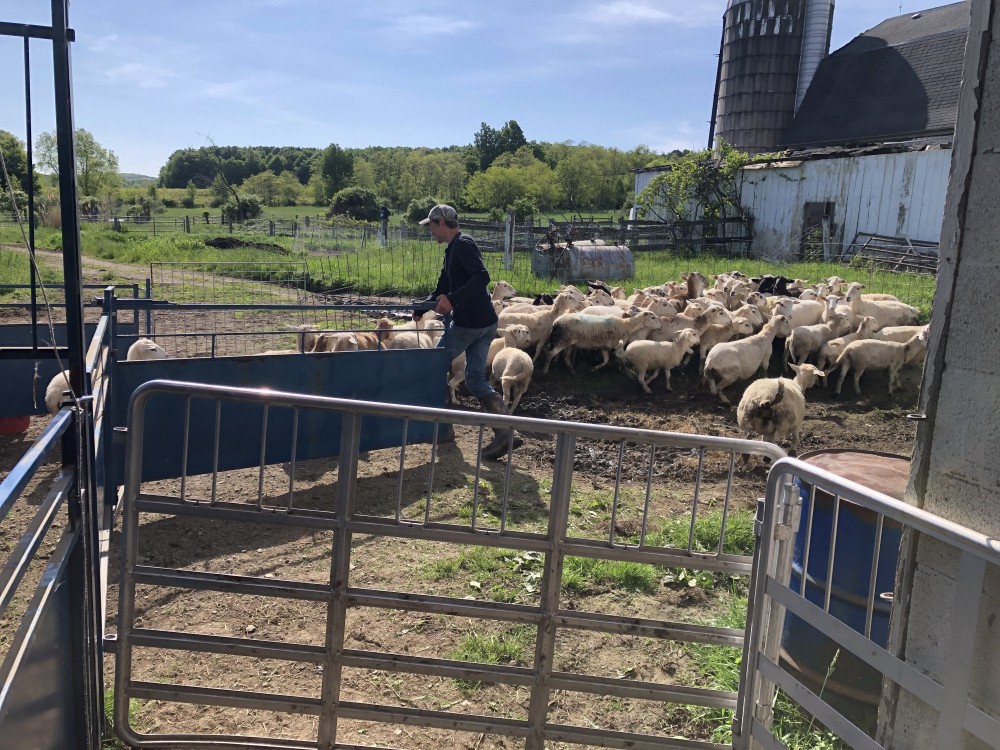
In the spring of 2025, each farm on the project was visited by Jess Waltemyer, PRO-LIVESTOCK Small Ruminant Specialist and myself. Five-Point Checks©, including a FAMACHA score, were performed on all animals over 9 months of age. Fecal samples were also collected for parasite egg counts and reduction testing. Those animals having a combination of low body condition scores, presence of wet dags (wet feces adhering to their backsides) and/or moderate to severe anemia were dewormed with the farmer's dewormer of choice. Six of the ten farms had animals to deworm during our first visit, and those farms were revisited in 2-3 weeks to check in on the animals' conditions and to collect feces to recheck fecal egg counts. Subsequent dewormings and rechecks were performed until the worm populations in affected animals proved susceptible to one of the three available dewormer classes. Each farm had its animals rechecked in the fall for the same indicators of parasites as they were in the spring.
In addition to the evaluation of individual animals, farmers received consultations regarding pasture management, using targeted deworming practices, and adjusting nutritional strategies in order to manage internal parasite burdens through integrated pest management.
Farm Demographics:
To get an idea of the farms we visited, here are the farm demographics:
- Herd/flock sizes ranged from 8-83 animals, with most having around 25 individuals.
- Most animals were being raised for meat with some raised for fiber, show, and 4-H.
- Nine farms raised sheep while one farm raised goats.
- Breed composition varied widely, with seven farms of the ten having crossbreds or multiple breeds.
Fecal Egg Counts and Interpretation
Fecal samples were collected from each of the animals that we evaluated, and strongyle eggs were counted in each sample. All 8 species of strongyles were counted; we were not differentiating between species. In general:
- High egg counts plus moderate to severe anemia strongly suggested Barber Pole Worm infections.
- High egg counts with normal anemia scores plus wet dags indicated a likely Brown Stomach Worm infection.
The overall number of strongyle eggs provided a baseline for the fecal egg count reduction test that we performed for the dewormed animals and gave the farmer valuable information about which animals in their groups naturally carried high worm loads. We concluded that those individuals that were able to carry more worms without anemia or other symptoms were genetically resilient to worm infestations. Those that had low worm numbers from the same flocks/herd were understood to be genetically resistant to infestations.
Results:
General trends
- A poor FAMACHA (anemia) score correlated directly with higher worm burdens. This indicates that the majority of the worm eggs identified in these samples were Barber Pole Worm.
- Bottle jaw prevalence was low and used by most farms as an indicator of severe Barber Pole Worm infections, and a need to immediately deworm.
- The presence of diarrhea correlated with a better plane of nutrition, rather than worm loads. Therefore, Brown Stomach Worm was not a great concern for our study farms. Farms with pasture acreage exceeding animal needs generally had higher forage quality and more animals exhibiting diarrhea.
- Poor coats that showed wool break were related to animals experiencing high worm burdens or stress. One of the most stressful situations we identified outside of worms was when animals were in peak lactation with twins or triplets.
- Animals had lower body condition scores at our spring visit vs our fall visit due to the stresses of lambing/kidding, lactating, and cold/wet weather in the late fall/winter/spring.
What did the worm burdens and 5 Point Checks© tell us?
- The typical rule that 20% of animals carry 80% of a farm's worms held true for farms with average worm burdens. This pattern broke down on farms with dewormer-resistant parasite populations, where a much larger proportion of animals carried high loads.
- Worm loads were higher in the spring and very low at our end-of-season visit in the fall. This is due to a combination of better nutrition over the summer coupled with a lower stress environment due to warmer temperatures and weaned offspring. In addition, worms have a tendency to encyst in the gut in the late fall and not shed eggs until temperatures and light patterns increase in the spring.
- Prior to our first visit, most farms dewormed all animals on a schedule rather than selectively by using a 5-Point Check© or FAMACHA score. The majority of farms on the project adopted the use of these tools by fall.
Snapshot of dewormer resistance in SWNY
Of the six farms that elected to deworm animals at their first visit, three had resistance to at least one class of dewormer, and one farm was approaching resistance based on the fecal egg count reduction test. One farm was resistant to one class of dewormers. Two farms were totally resistant to all three classes of dewormers. Resistance is indicated by less than a 75% reduction in worm loads assessed through a fecal egg count reduction test.
However, this represents only part of the regional picture. Not all farms had animals requiring treatment during our visits, and not all dewormer classes were tested at every farm. Additionally, farms with animals sourced from multiple origins may have inadvertently combined resistant parasite populations, creating mixed levels of susceptibility within a single herd or flock.
All this is to say, we know that there is significant internal parasite resistance to our three available classes of dewormers in the SWNY region. We also know that each farm has different challenges with internal parasites. Identifying if a dewormer is effective or not is the first step to ensuring that your deworming protocols will be effective. In addition to finding an effective dewormer, implementing Integrated Pest Management protocols to reduce worm burdens and resistance is imperative. These can look like:
- Rotating pastures at least weekly and not restocking them for 45-60 days during the grazing season to allow parasites living in the pasture to die off.
- Grazing no lower than 4" on average reduces the number of parasites sheep and goats pick up. Parasite larvae survive best in the lower 2" of forage.
- Not rotating onto wet pastures in the spring and fall, when parasite survivability is at its highest.
- Checking animals every two weeks for signs of anemia via a FAMACHA test during the grazing season and only deworming those animals that show a moderate to severe anemia score. If you can't check the whole flock or herd, check those that appear less thrifty at a minimum.
- Recheck the anemia scores in two weeks to determine effectiveness of the dewormer you used, and switch deworming classes if the dewormer you use is no longer effective
- Storing dewormers properly to reduce degradation of active ingredients due to heat/light.
- Providing the right nutrition for the age and stage of production of your animals. This includes everyday access to species-specific minerals
Parasite will always be a part of raising sheep and goats, but they don't have to result in devastating effects. Managing your animals to reduce exposure to worms, and only exposing worms to drugs when necessary, are scientifically proven ways to help our toolbox remain full for years to come.
If you have questions about parasite management in your sheep or goats and live in Allegany, Cattaraugus, Chautauqua, Erie, or Steuben Counties, please contact Amy Barkley at 716-640-0844 or amb544@cornell.edu
This work is supported by the Northeast Extension Risk Management project award no. 2024-70027-42540, from the U.S. Department of Agriculture's National Institute of Food and Agriculture.
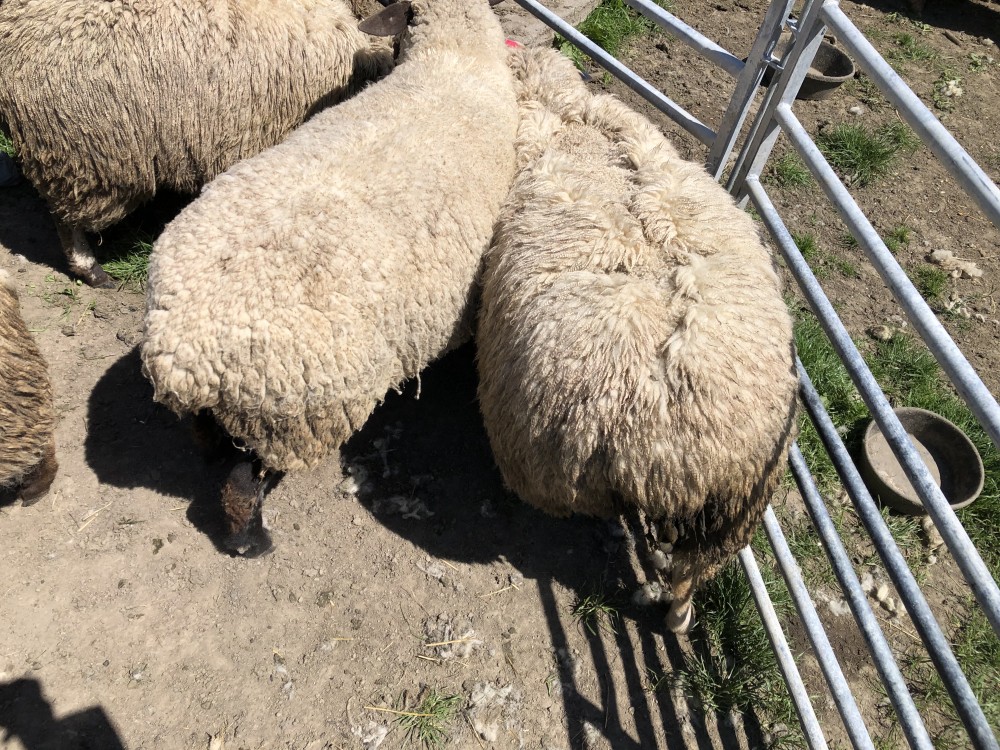 The ewe on the right is exhibiting wool break, which is when the wool is weak from stress-related factors. Checking the coat is part of checking the overall health of the animal. Click to enlarge.
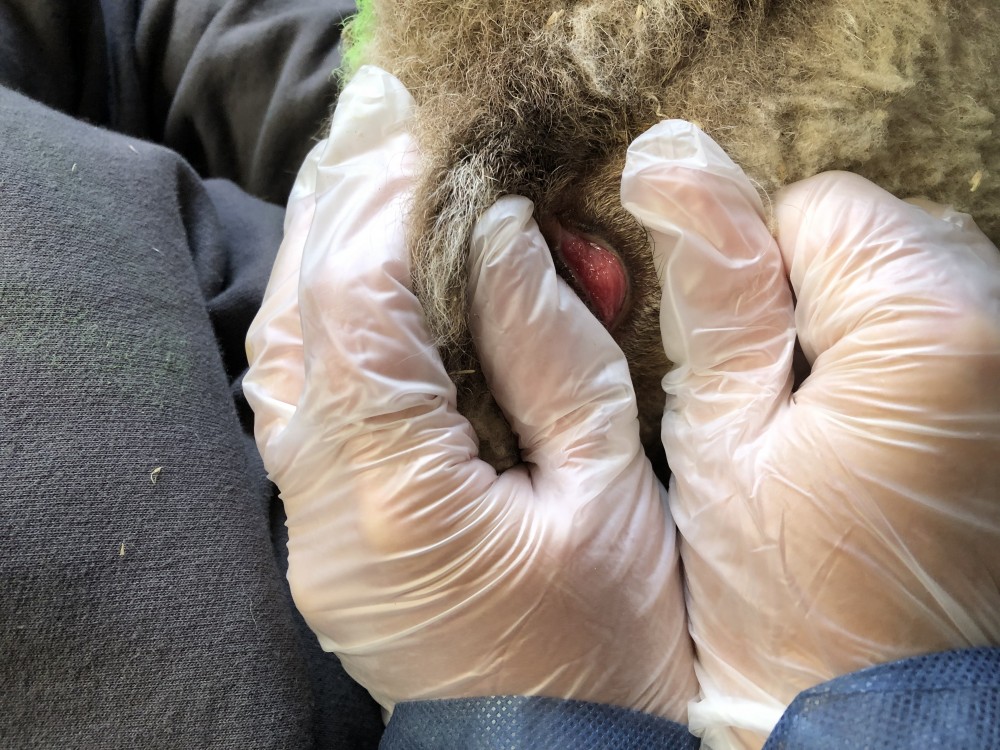 FAMACHA testing is a method of looking for anemia in sheep and goats by popping out the lower eyelid membrane and comparing it to a known scale. The results indicate the level of anemia and need to treat the animal for a Barber Pole Worm infection. Click to enlarge.
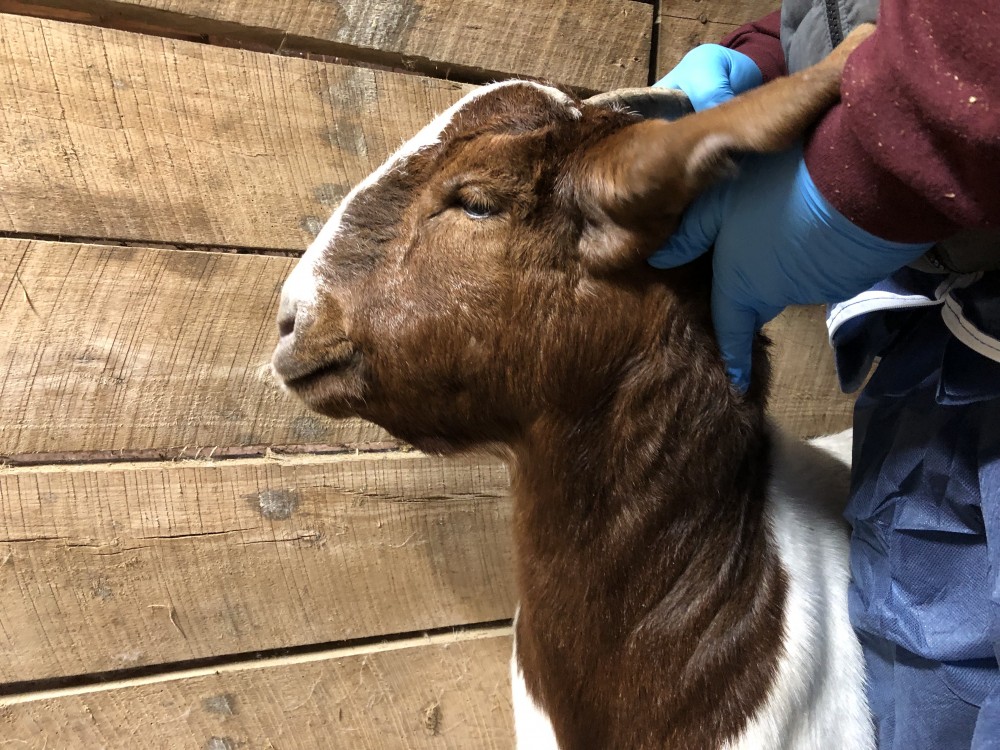 Example of advanced bottle jaw on a goat. Note the bulge of flesh between the lower jar bones that will feel like a water balloon. This is a symptom of a severe Barber Pole Worm infection. Click to enlarge.
Field Crops
Dairy
Business
Livestock

Grains
Upcoming Events
Poultry Processing Workshop, Canandaigua, NY
September 17, 2026 : Poultry Processing Workshop - Canandaigua, NY
Canandaigua, NY
This program is one of four statewide roadshow stops across the state, offering farmers a full poultry processing experience. The class will teach skills that build confidence, reduce costs, and strengthen your farm's independence. This hands-on workshop gives farmers the chance to process a bird from start to finish, learning every step of the workflow used by small farms across the state.
Tax 101: An Introduction to Income Taxes for Farmers
September 17, 2026 : Tax 101: An Introduction to Income Taxes for Farmers
Join NY Farm Net for a FREE mid-day webinar about income tax basics for farmers. Attendees will learn what documents you need, options for recordkeeping systems, how identify common tax forms and schedules, and more!
Large Animal Awareness Training For First Responders
September 19, 2026
Dunkirk, NY
Join the Chautauqua County Technical Rescue Services and NYS Veterinarian, Dr. Kate Card-Allen, for a specialized training on how to safely and effectively respond to large animal incidents. Learn techniques for managing large animals during traffic accidents, rollovers, entrapments and other transportation emergencies.
Announcements
No announcements at this time.