
What to Know Before You Mow
Katelyn Miller, Field Crops and Forage Specialist
Southwest New York Dairy, Livestock and Field Crops Program
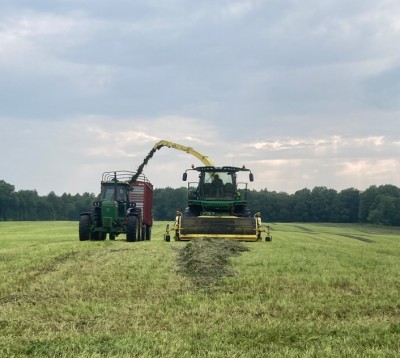
Manure continues to be spread onto fields, tillage implements have been in motion, corn and soybeans are starting to get planted, but have you thought about first cutting yet? Collecting this forage offers an opportunity to capture a high quality and quantity of forage, but doing so in a timely manner can come with an array of obstacles.
One of the many obstacles that comes with harvesting crops is time. Spring is a hectic time of year with countless activities that need to be completed for a productive growing season. Whether planting other crops, tilling, or applying herbicides, nutrients, or lime, they all take time and energy to complete. When strategizing all these field activities, it's important to remember the value of first cutting as it can make up a substantial portion of your annual forage inventory.
Weather
This past winter and early spring have shown a fluctuation of precipitation and temperature averages. From December 1st - February 28th, much of our region averaged more than 12 inches above normal snowfall. March was up to 8?°F warmer than normal throughout the Northeast with below normal snowfall (NRCC). These past few weeks have seemed to present an abundance of precipitation. From April 21st to May 4th where I live, I have received approximately 4.5 inches of rain. This value varies greatly depending on location, but continued variable weather patterns such as this could present harvest challenges for first cutting.
Rainfall has one of the largest impacts in harvesting a timely, quality crop. Rain usually results in cloudy days, reducing energy to the plants for photosynthesis and growth. One inch of rain on cut forages can result in a loss of more than 30% of the dry matter due to leaf shatter, while another 10-15% lost due to leaching (Undersander). Additionally, proteins and nonfibrous carbohydrates (NFC) can be leached. These types of losses can result in high fiber, low protein, and low NFC (starch/sugar) forages. This is important from a general quality perspective, but it also impacts fermentation. This increases the risk of mold developing during the fermentation process, and subsequently increases the potential for developing high levels of mycotoxins.
Rain obviously impacts quality directly, but it can also impact quality because it affects the timing of your field activities. When your forages are at the maturity best for your livestock, the fields may not be ready for you to drive over them. Field access is a challenge as saturated soils have an increased risk for compaction, and your risk of getting stuck with equipment increases. What do we do when we get stuck? Use other (usually larger) equipment to pull ourselves out. Remember that it takes years to remediate compaction issues and that it will hurt production by destroying soil structure, among other things. If you're thinking "I don't know if I should be on this field right now", then you probably shouldn't be. Your only other choice is to let the forage overmature until you can get onto the field.
Harvest Timing and Management
When forage is cut, it generally has a moisture content of around 75-80%. Ideally, haylage should be hitting the bunks at 60-65% moisture content. At these values, there should be sufficient moisture for fermentation, but not too much that it causes spoilage. To get rapid moisture loss following cutting, the stomates need to remain open, which happens with daylight. The quicker the moisture drop of 10-15% happens in preparation for haylage, the lower the loss of starches and sugars will be, and the more total digestible nutrients will be preserved.
Grass stands should be cut at approximately 4 inches above the soil surface while alfalfa can be cut slightly closer to the ground. Cutting grass stands too close to the ground causes stress and delays regrowth, while doing long term damage to yield and quality. Alfalfa regrows from the crown, while grass regrows from leaf blades. In mixed stands, consider the proportion of grass and alfalfa and future viability of the stand to determine an ideal cutting height.
While it is difficult to assess the quality of forages in the field without analyzing samples, there are some benchmarks that can be used to estimate harvest timing. Research conducted by Dr. Jerry Cherney has proven that alfalfa height is a reliable indicator of Neutral Detergent Fiber (NDF) values in the field. The chart below shares height indicators for alfalfa and grass NDF content.

As a general rule of thumb:
- Begin cutting 100% grass stands when nearby alfalfa is 14" tall to achieve the desired 50% NDF.
- Begin cutting 50/50 alfalfa-grass stands when nearby alfalfa is 22" tall for the desired 44% NDF.
- Begin cutting 100% alfalfa stands when alfalfa is 28" tall for the desired 40% NDF.
Predicted days to cut are based on daily NDF increases that range for grasses, alfalfa, and mixed stands. For grasses, NDF usually increases about 0.8-1.2/day while alfalfa NDF increases from 0.4-0.7/day. These values can help predict the days to cutting for the desired NDF value. Additional tools have been developed to help estimate harvest timing which you can find here: https://tools.forages.org/.
Pest pressure also contributes to quality. Scouting your fields is an important management tactic that allows you to make timely management decisions. If thresholds are reached early in the season, treatments should be considered to maintain quality. This year, I have already heard reports of alfalfa weevils showing feeding damage, so get out there and scout!
Other Considerations
Managing first cutting isn't only about managing quality but also protecting its value. While fertilizer prices have stabilized some for 2025, they are sensitive to market shifts in supply, demands, and trade conditions. The U.S. imports over 90% of its potash, with about 80% coming from Canada (Reuters). As of March, there was a 10% tariff placed on potash exports. Even with the higher price tag, producing high-quality forage often pencils out better than purchasing in feed. A few reminders:
- Soil testing should be the backbone of your nutrient management strategies. Understanding baseline fertility and pH will allow you to finetune nutrient applications.
- You cannot out-fertilize weather extremes. Wet or dry, no amount of nitrogen will rescue stressed plants.
- Compaction hurts the bottom line. Rushing onto fields too soon can backfire. Lost yield from compaction may cost more than a delayed harvest.
Another important part of harvest timing and management is a harvest plan. Being prepared will allow you to execute your plan with minimal stress. Some factors to consider include:
- Clear out bunk space where the new forage is going.
- Perform maintenance on tractors, trucks, mowers, rakes, and wagons.
- Connect with your farm staff - cover protocols and safety measures.
- Line up your custom harvester and any additional labor you'll need.
- What is your contingency plan if something goes wrong?
- Reflect on past harvest experiences. What has and hasn't gone well? How will you improve them this year?
There are many factors that can affect our ability to harvest a quality forage crop. Planning ahead is important - walk your fields, get equipment ready, and communicate your harvest plan with the team. First cutting doesn't wait, so don't wait to get ready!
References
Northeast Regional Climate Center (NRCC). (2025). https://www.nrcc.cornell.edu/
Reuters. (2025). US, Canadian farmers face soaring fertilizer prices amid trade war. https://www.reuters.com
Undersander. (2021). Forage Quality of First Cutting Due to Wet Spring. https://fyi.extension.wisc.edu/forage/forage-quality-of-first-cutting-due-to-wet-spring/
Field Crops
Dairy
Business
Livestock
Grains
Upcoming Events
Poultry Processing Workshop, Canandaigua, NY
September 17, 2026 : Poultry Processing Workshop - Canandaigua, NY
Canandaigua, NY
This program is one of four statewide roadshow stops across the state, offering farmers a full poultry processing experience. The class will teach skills that build confidence, reduce costs, and strengthen your farm's independence. This hands-on workshop gives farmers the chance to process a bird from start to finish, learning every step of the workflow used by small farms across the state.
Tax 101: An Introduction to Income Taxes for Farmers
September 17, 2026 : Tax 101: An Introduction to Income Taxes for Farmers
Join NY Farm Net for a FREE mid-day webinar about income tax basics for farmers. Attendees will learn what documents you need, options for recordkeeping systems, how identify common tax forms and schedules, and more!
Large Animal Awareness Training For First Responders
September 19, 2026
Dunkirk, NY
Join the Chautauqua County Technical Rescue Services and NYS Veterinarian, Dr. Kate Card-Allen, for a specialized training on how to safely and effectively respond to large animal incidents. Learn techniques for managing large animals during traffic accidents, rollovers, entrapments and other transportation emergencies.
Announcements
No announcements at this time.