
So You Want To Become A Certified Pesticide Applicator?
Katelyn Miller, Field Crops and Forage Specialist
Southwest New York Dairy, Livestock and Field Crops Program
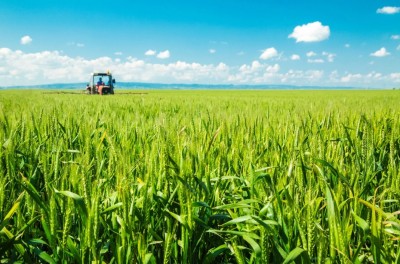
Have you ever thought about becoming a Certified Pesticide Applicator but felt intimated by the process? This article walks through the steps to become a Certified Private Pesticide Applicator, including the necessary training, requirements, and testing as required by the Department of Environmental Conservation (DEC).
HOW DO I KNOW IF I AM ELIGIBLE?
To be eligible to become a certified applicator, there are experience and/or training requirements that need to be fulfilled. First, all applicants must be at least 17 years of age or older. Additionally, those who want to become certified need to meet at least one of these below requirements:
• have at least one year of full-time experience within the last three years in the use of pesticides in the category or categories that the individual is seeking certification; or
• have completed a comprehensive 30-hour training course, approved by the department; or
• have received an associate degree or higher from an accredited college or university which covers the topics listed in Section 325.18, and related categories in Sections 325.16 or 325.17; or
• have one year of verifiable experience as a commercial applicator in a corresponding commercial category; or
• certification in another state that New York has reciprocity (CT, IN, NJ, OH, PA, RI, VT)
You'll notice the "or's" at the end of each bullet. This means that you do not have to meet every requirement. Of the above bulleted options, you only must meet one of these requirements to be eligible to take the exam. If you do not have experience, there are approved 30-hour courses available to take online.
HOW DO I PREPARE FOR THE EXAM?
Once you know that you meet all the requirements to become an applicator, you must take the exams. This includes a CORE and a category exam, both of which every individual must take to become certified applicator and purchase Restricted Use Pesticides (RUP). The CORE exam is closed book, meaning that you do not have access to the manual while taking the test. It is recommended that you study for 30 hours before taking the exam. For the category exam, pick whichever category best fits what you are regularly spraying. This exam is open book, meaning that you can use the category manual, and any additional pamphlets that have been given to you such as Article 33 & Part 325.
All manuals can be purchased through the Cornell Bookstore or by contacting your local Cornell Cooperative Extension for assistance. The private categories that you can choose from include:
21: Field and Forage
22: Fruit
23: Vegetable
24: Greenhouse and Florist
25: Nursery, Ornamentals & Turf
31: Agricultural Animal Pest Control
Books typically run around $50. Exam fees are $100, which allows you to take up to two exams at one time. Examinations are conducted through the regional offices. In Southwest NY, there are two regions; 8 and 9. Region 8 headquarters are in Avon, while Region 9 is in Buffalo.
HOW DO I MAINTAIN MY LICENSE?
When you pass the exam, there are fees to maintain and recertification credits that must be attained to maintain it. Private licenses renew every 5 years, with a fee of $25 for those who are the only applicator, and $5 for those applicators who are the secondary applicators under a farm/business. Within the five years, you need to get 10 recertification credits. 25% of the credits must be specific to the category you are certified in, totaling 2.5 credits. The remaining credits can be specific to your category or CORE. You cannot get all of the credits within one year. If you do not get the required credits within the given t ime limit, your license will lapse, and you will have to retest to become certified again.
By meeting the eligibility requirements, completing the necessary training, and preparing for the exams, you'll be well on your way to earning your certification. Maintaining your license through recertification credits ensures that you are up to date on best practices and regulations. If you are looking for exam dates, classes with recertification credits, or a specific product, use the NYSPAD website: https://extapps.dec.ny.gov/ nyspad/?0. If you have any questions, contact your local DEC office.
This article is for those interested in becoming a Certified Private Pesticide Applicator. To become a Certified Commercial Pesticide Applicator, different requirements apply. All information has been reviewed by the DEC for accuracy. Every effort has been made to provide complete and up-to-date pesticide recommendations. Changes occur constantly and human error are still possible.
Field Crops
Dairy
Business
Livestock
Grains
Upcoming Events
Poultry Processing Workshop, Canandaigua, NY
September 17, 2026 : Poultry Processing Workshop - Canandaigua, NY
Canandaigua, NY
This program is one of four statewide roadshow stops across the state, offering farmers a full poultry processing experience. The class will teach skills that build confidence, reduce costs, and strengthen your farm's independence. This hands-on workshop gives farmers the chance to process a bird from start to finish, learning every step of the workflow used by small farms across the state.
Tax 101: An Introduction to Income Taxes for Farmers
September 17, 2026 : Tax 101: An Introduction to Income Taxes for Farmers
Join NY Farm Net for a FREE mid-day webinar about income tax basics for farmers. Attendees will learn what documents you need, options for recordkeeping systems, how identify common tax forms and schedules, and more!
Large Animal Awareness Training For First Responders
September 19, 2026
Dunkirk, NY
Join the Chautauqua County Technical Rescue Services and NYS Veterinarian, Dr. Kate Card-Allen, for a specialized training on how to safely and effectively respond to large animal incidents. Learn techniques for managing large animals during traffic accidents, rollovers, entrapments and other transportation emergencies.
Announcements
No announcements at this time.