
Reflecting on Tar Spot in 2022
Excerpt from P. Esker and A. Collins: Penn State ExtensionThe tar spot situation in Pennsylvania
While tar spot was first found in Pennsylvania in late 2020, its spread was limited in the commonwealth until recently. This year (2022), tar spot was found across the majority of southern PA and in western PA into the Lake Erie region. This tar spot map (Figure 1.) shows counties with officially confirmed reports, but given the current distribution, there is a high likelihood of tar spot presence in unreported areas. We want to emphasize that there were no reports of yield loss due to tar spot in the areas affected.
How the pathogen survives and spreadsThe fungus that causes tar spot can survive our PA winters in corn residue on fields, in stover, and uncomposted bedding. We also hypothesize that the fungus can live and overwinter in certain grassy weeds. When the weather becomes favorable to the fungus in the summer, spores will be produced from these reservoirs and blow on the wind or splash onto fresh corn plants.
What we should do about tar spotKnowing tar spot has been detected in your county is not a reason to plan to spray next season. While we are still learning about the conditions that favor development, you can think about this as you do for diseases such as gray leaf spot and northern corn leaf blight. We typically see these diseases every year, but we often do not benefit economically from a spray for them. Instead, knowing tar spot has been found near you means you should now be scouting for symptoms earlier in the season (say, by July 4th) so that you can track arrival and progress to inform your fungicide decisions better. Suppose tar spot is detected early in a field (like during vegetative or early reproductive growth stages), and disease-favorable weather conditions are predicted for the next few weeks (mild and moist). In that case, an application may be warranted. Because tar spot is new to the regions where we test fungicide efficacy in the northeast, we currently know very little about optimal fungicide timing.
If you have detected tar spot on your farm or a neighboring one, talk to your seed dealer about selecting hybrids that are not highly susceptible to this disease. While no hybrids are completely resistant to tar spot, seed companies are beginning to learn which are poor performers under pressure. In Pennsylvania, we have not yet had sufficient disease pressure to test the performance of the hybrids in our public field trials.
Finally, strategies to increase the decomposition of corn residue in an affected field may help reduce the inoculum for the next season. Realistically, the number and proximity of corn fields in our state mean that tar spot inoculum will likely be able to blow in from areas outside of your control but reducing the fungus' survival could prolong the time before the onset of disease in any given field, and this may allow you to miss a susceptible window for your crop.
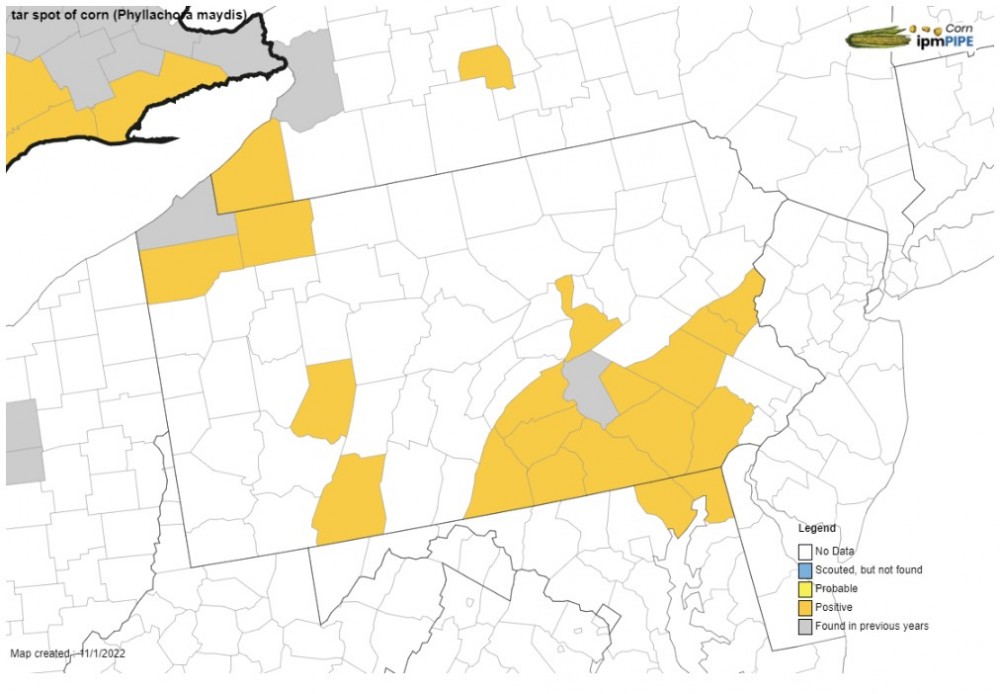 Counties positive for tar spot of corn as of November 2022.
Field Crops
Dairy
Business
Livestock

Grains
Upcoming Events
Poultry Processing Workshop, Canandaigua, NY
September 17, 2026 : Poultry Processing Workshop - Canandaigua, NY
Canandaigua, NY
This program is one of four statewide roadshow stops across the state, offering farmers a full poultry processing experience. The class will teach skills that build confidence, reduce costs, and strengthen your farm's independence. This hands-on workshop gives farmers the chance to process a bird from start to finish, learning every step of the workflow used by small farms across the state.
Tax 101: An Introduction to Income Taxes for Farmers
September 17, 2026 : Tax 101: An Introduction to Income Taxes for Farmers
Join NY Farm Net for a FREE mid-day webinar about income tax basics for farmers. Attendees will learn what documents you need, options for recordkeeping systems, how identify common tax forms and schedules, and more!
Large Animal Awareness Training For First Responders
September 19, 2026
Dunkirk, NY
Join the Chautauqua County Technical Rescue Services and NYS Veterinarian, Dr. Kate Card-Allen, for a specialized training on how to safely and effectively respond to large animal incidents. Learn techniques for managing large animals during traffic accidents, rollovers, entrapments and other transportation emergencies.
Announcements
No announcements at this time.