
The Rise of Herbicide Resistant Weeds
Katelyn Miller, Field Crops and Forage Specialist
Southwest New York Dairy, Livestock and Field Crops Program
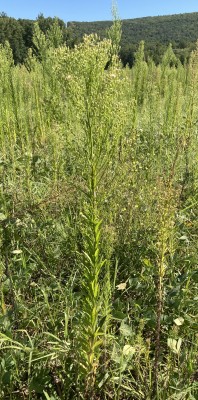
According to the International Herbicide-Resistant Weed Database, there are 548 unique cases (site of action x species) of herbicide-resistant weeds globally. Weeds have evolved resistance to 21 of the 31 known modes of actions and 168 different herbicides. In the United States, over 160 weed populations have been confirmed to have herbicide resistance. This is a growing problem in the Northeast, but it's not a new phenomenon to NYS. The first confirmed herbicide-resistant weed population in the state was lambsquarter identified in 1977 to triazine.
Herbicides are a key management strategy to controlling weeds, with 96% of U.S. corn and soybean acreage receiving herbicide applications annually. The introduction of resistant crop traits (ie Roundup Ready) helped revolutionize modern agriculture but has caused a large reliance on a single, or relatively few modes of actions. This has developed selection pressure on weed populations, leading to a substantial increase in herbicide-resistant weeds. In NYS, there are 7 weed species that have populations confirmed to have developed herbicide resistance to at least one mode of action, which include:
- Common lambsquarter
- Common ragweed
- Common groundsel
- Marestail/Horseweed
- Tall waterhemp
- Annual ryegrass
- Palmer amaranth

Tall waterhemp was first identified in NY in 2014 and has since been confirmed in 25 counties. Referred to often as a 'superweed', this is one of two pigweed species with confirmed populations that have evolved resistance to glyphosate. One population screened in Chautauqua County showed resistance to three products: glyphosate & synchrony (group 9) and atrazine (group 5). A survey conducted by the Weed Science of America has classified as one of the most troublesome weeds in agronomic crops, having evolved resistance to 7 different modes of action nationwide (2, 4, 5, 9, 14, 15 and 27). The second pigweed species is Palmer amaranth, with populations confirmed to be glyphosate resistant, with select populations showing multiple resistance to atrazine, mesotrione (ie Callisto), and chlorimuron-ethyl + thifensulfuron-methyl (ie Synchrony). Palmer is one of the fastest growing weeds, with small plants able to double in size every 2-3 days. Both species are prolific seed producers and can grow anywhere from 3.5 - 8 feet tall. They are an incredibly competitive species with a long season of germination, making a strong weed management program crucial to preventing these weeds from taking over the crop canopy.

Glyphosate resistant Marestail was first identified in SWNY in 2020. With additional screening efforts, some populations have also evolved two-way resistance of both glyphosate and ALS inhibitors (ie Pursuit, Classic). This species is pretty unique as it operates as both a winter and summer annual, so it can germinate in the fall or spring. Marestail is a prolific seed producer as well, and with feather light seeds that can spread vast distances. In addition to managing this weed in your fields, field edges and roadsides can reinfest areas, so managing these will help reduce the development and spread of seed.
Newer to the conversation is Annual ryegrass, a common cover crop species. As is, mature plants can be difficult to kill with glyphosate when applied under suboptimal conditions, but glyphosate resistant populations are starting to pop up in WNY. Additional screening efforts are being conducted to better understand the mechanism behind this developed resistance and the status of other modes of actions.
The increase of herbicide-resistant weed populations highlights how critical a diverse approach to weed management is needed. A multitude of strategies should be employed to manage and reduce the spread of these concerning weed species. Management strategies include:
Scouting:
Your first line of defense is understanding what weed species are present. This is what guides your management decisions, including your herbicide decisions. Ideally, you are killing weeds before/up to 4 inches tall for best efficacy of your product. Additionally, monitoring for escapes throughout the season will allow you to catch potential resistant weeds early on. This gives you the opportunity to contain and minimize the spread.
Rotation:
Repeated use of a single mode of action increases selection pressure for resistance to develop. In your spray program, utilize different MOA's in your tank, or at least rotate between which single one you're using. Crop rotation plays a key role here as well, allowing you to use different MOA's based on the crop. Also, general crop rotation can help break up weed cycles. For example, Palmer amaranth has a short-lived seed (~3 years), so rotating into a perennial sod crop could help greatly reduce populations.
Prevention:
The easiest way to control weeds is to not let them get established on your farm in the first place. When purchasing equipment, especially something such as a combine with many places for seed to hide, perform a cleanout. While you should do this with all equipment, it especially needs to be done when equipment is coming from areas with known herbicide-resistance. It has been documented that a combine can hold 150 pounds of biomaterial internally. Additionally, if you know you have resistant weed populations on your farm you want to slow down the spread. Save infested fields for last in the harvest rotation. If pressure is specific to one spot of the field, save it for last to stop it spreading further.
Herbicide-resistant weeds are more problematic than ever, making it crucial to employ a variety of management strategies to prevent and/or slow down the spread of these problematic weeds.
Field Crops
Dairy
Business
Livestock
Grains
Upcoming Events
Dairy Feeder School
October 29, 2026 : Dairy Feeder School
Freedom, NY
- One day on-farm training for dairy farm feeders
- Offered in English and Spanish
- Stations with hands-on activities/demos
Tax 102: Tax planning and strategies for Farmers
November 4, 2026 : Tax 102: Tax planning and strategies for Farmers
This webinar follows the "Introduction to Income Taxes" webinar from September, going more into depth on topics including: understanding common tax concepts, tax strategies, long-term approaches to managing taxes, and more!
Labor Roadshow: Practical Workforce Strategies for Agricultural Professionals Across New York
November 30, 2026
December 21, 2026
The Agricultural Workforce Development Council of New York State (AWDC) will celebrate a decade of connecting and educating agricultural professionals when Labor Roadshow X returns this December with five in-person events and two webinars across New York State.
For nearly ten years, the Labor Roadshow has brought agricultural professionals together to learn, connect, and navigate the evolving challenges of agricultural labor. The 2026 event will continue that tradition with timely, expert-led discussions focused on the issues affecting farms and agricultural employers today—including labor law and compliance, employee engagement, retention, and workplace culture.
Announcements
No announcements at this time.