
Grains
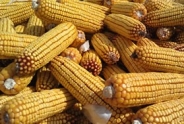 Grain crops such as corn, soybeans and small grains are grown on over 100,000 acres in the five county area of Allegany, Cattaraugus, Chautauqua, Erie, and Steuben each year.
 USDA Helps Organic Producers with Certification Costs
USDA's Farm Service Agency is accepting applications to help with organic certification costs for the 2025 and 2026 program years through the Organic Certification Cost Share Program, which?covers up to 75% of eligible organic certification costs. Producers and handlers must apply by Dec.?31, 2026, for both program years.
The Root of the Problem: Battling Western Corn Rootworm
Katelyn Miller, Field Crops and Forage Specialist
Southwest New York Dairy, Livestock and Field Crops Program

Based on grower reports out of Central NY, 22 fields and over 2,000 acres have been impacted over 4 counties by root injury and goosenecking. The southern tier is not immune from CRW pressure, as scouting efforts show pest presence here as well. So, how serious is this pest and what's the end result?
All About Drone Imaging

Are you interested in scouting with a drone on your farm? Check out this article for a deep dive into the types of imaging, it's uses and management decisions that can be made using this technology.
Does Fungicide Application Pay in Corn?
Katelyn Miller, Field Crops and Forage Specialist
Southwest New York Dairy, Livestock and Field Crops Program
Does it pay to spray a fungicide? Check out this article for considerations on using a fungicide as a disease management tool in corn.
A Side of Nitrogen, Please!
Katelyn Miller, Field Crops and Forage Specialist
Southwest New York Dairy, Livestock and Field Crops Program
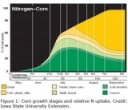
As we know, nitrogen (N) is a critical nutrient for corn production, but is also one of the most difficult to manage. Application rates must be balanced in a way that meets crop needs in an economical way, while also protecting against environmental
losses. One of the best ways to manage this is by using practices such as sidedressing to provide additional N at a time
when the plant will have increased uptake requirements.
Soybean Replant Considerations for Upstate NY Growers
Poor soybean emergence is one of the more frustrating situations a grower can face in early summer, and it raises an immediate question: do I replant, or do I make the best of what I've got? The answer is rarely straightforward, but understanding a few key decision-making factors can help you make a more confident and financially-sound decision.
POST Herbicide Applications During Hot Weather

This week is bringing us plenty of heat, bringing in questions about POST herbicide applications. Check out these tips for an impactful herbicide application in soybeans with elevated temperatures.
The Rise of Herbicide Resistant Weeds
Katelyn Miller, Field Crops and Forage Specialist
Southwest New York Dairy, Livestock and Field Crops Program

The introduction of resistant crop traits helped revolutionize modern agriculture but has caused a large reliance on a single, or relatively few modes of actions. This has developed selection pressure on weed populations, leading to an increase in herbicide resistant-weeds. In New York State, we have 7 weed species confirmed to have developed resistance to at least one mode of action.
Dry Weather and Residual Herbicides: What Should Growers Expect?
Dust is starting to fly which is bringing in some pre-emergent herbicide questions: What is happening to my PRE herbicides? Are they still there? And do I need to adjust my weed management plans?
What's the Sweep on Insects this Season?
Katelyn Miller, Field Crops and Forage Specialist
Southwest New York Dairy, Livestock and Field Crops Program

This winter was a "classic NY winter", but was it cold enough to actually impact insect populations? While we can't predict pest pressure with any greater accuracy than long-term weather forecasts, we can evaluate historic insect populations, weather and biology to give us a better idea of what we could see this growing season.
Building Forage Inventories Amid High Input Costs
Following the challenging weather of the 2025 growing season, many dairy farms are facing tight forage inventories and looking to 2026 to rebuild forage supplies. The current economic conditions of escalating input costs and tight milk prices increase the difficulty of accomplishing this goal. Despite all of this, farms can still look for the best practices to achieve their forage inventory goals.
Managing Field Crops in Wet Springs
It's no secret that last year's spring was a particularly cold and wet one. While it seems like this spring should be warming up and drying out sooner than last year, it's still important that we know how to stay flexible in chaotic conditions and make the right management decisions for our short and long-term goals.

Field Crops
Dairy
Business
Livestock
Grains

Upcoming Events
Dairy Feeder School
October 29, 2026 : Dairy Feeder School
Freedom, NY
- One day on-farm training for dairy farm feeders
- Offered in English and Spanish
- Stations with hands-on activities/demos
Tax 102: Tax planning and strategies for Farmers
November 4, 2026 : Tax 102: Tax planning and strategies for Farmers
This webinar follows the "Introduction to Income Taxes" webinar from September, going more into depth on topics including: understanding common tax concepts, tax strategies, long-term approaches to managing taxes, and more!
Labor Roadshow: Practical Workforce Strategies for Agricultural Professionals Across New York
November 30, 2026
December 21, 2026
The Agricultural Workforce Development Council of New York State (AWDC) will celebrate a decade of connecting and educating agricultural professionals when Labor Roadshow X returns this December with five in-person events and two webinars across New York State.
For nearly ten years, the Labor Roadshow has brought agricultural professionals together to learn, connect, and navigate the evolving challenges of agricultural labor. The 2026 event will continue that tradition with timely, expert-led discussions focused on the issues affecting farms and agricultural employers today—including labor law and compliance, employee engagement, retention, and workplace culture.
Announcements
No announcements at this time.