
Baby, It's Cold Outside: Winter Management for Dairy Calves
Katie Callero, Dairy Management Specialist
Southwest New York Dairy, Livestock and Field Crops Program
The holiday season is rapidly approaching, and we have already seen quite the snowfall across the southwest New York region as we head into mid-December. As the popular holiday song says, "Baby, It's Cold Outside." The cold doesn't just affect us; it also impacts your calves. Cold stress occurs when temperatures drop below an animal's thermoneutral zone. The thermoneutral zone is a temperature range in which an animal does not have to spend any additional energy to regulate their body temperature. Young calves are especially vulnerable because they have limited body fat. This type of environmental stress event for the calf can have long term effects on calf health, growth, and ultimately farm economics.
The best way to spot calves experiencing cold stress is through frequent and careful observation. Watch for behavioral cues such as shivering, reduced activity, nesting behavior, and decreases in feed intake. In pair or group-housing, cold-stressed calves will often huddle tightly together. You can also check the calf for physical signs, such as cold ears or a wet coat. All of these can be indicators that the calf is not adapting well to the colder environment. There are some management strategies that we can use to help minimize cold stress.
Proper housing and bedding are essential in the winter. Calves should have plenty of deep, dry bedding to help insulate them from the cold ground and retain body heat. This may require using more bedding material than you typically do in other seasons. It is also important to monitor air flow in calf housing areas. Drafts should be minimized while still maintaining adequate ventilation. Proper ventilation is essential to stop the buildup of ammonia odors which can contribute to respiratory problems during winter. Calf jackets are another great management tool for reducing cold stress. Ensure newborn calves are completely dried before putting on a jacket. Jackets should never be placed on a wet calf, as this traps moisture and increases chilling. It is equally important to remove jackets as temperatures rise to prevent overheating. If a calf sweats under its jacket during the day, that trapped moisture can lead to chilling if temperatures drop at night. Overall, jackets are a valuable tool for maintaining warmth when used correctly and monitored carefully. As temperatures drop, the challenge for calves isn't just staying warm but also meeting the extra energy demands that come with it.
Due to this drop in temperature and increase in energy expenditure to stay warm, calves typically will need an increase in milk in colder weather. Table 1 from Dr. Mike Van Amburgh from Cornell University shows the temperature in Celsius along the columns and the calf bodyweight in kilograms across the rows. In general, as temperature decreases and bodyweight increases, the calf's maintenance requirement (shown in Mcal) also increases. Let's use this table to follow an example calf. It's a cold Christmas day at -15 degrees Celsius and my calf Noel weighs 30 kg. Using the table I find that she requires 2.5 Mcal for maintenance per day. To feed my calves, I use a 20:20 milk replacer that I know provides 4.67 Mcal/kg. Now, I will take Noel's maintenance requirement (2.5) and divide that by the energy provided in the milk replacer (4.67) to find out that I need 0.54 kg of milk replacer power to meet her maintenance requirements.  Simple exercises like this with your own herd can help you visualize how a drastic temperature drop could shift your feeding protocol. Understanding these increased energy needs is only one piece of winter calf care, but it showcases the bigger theme that small management adjustments can make a big difference.
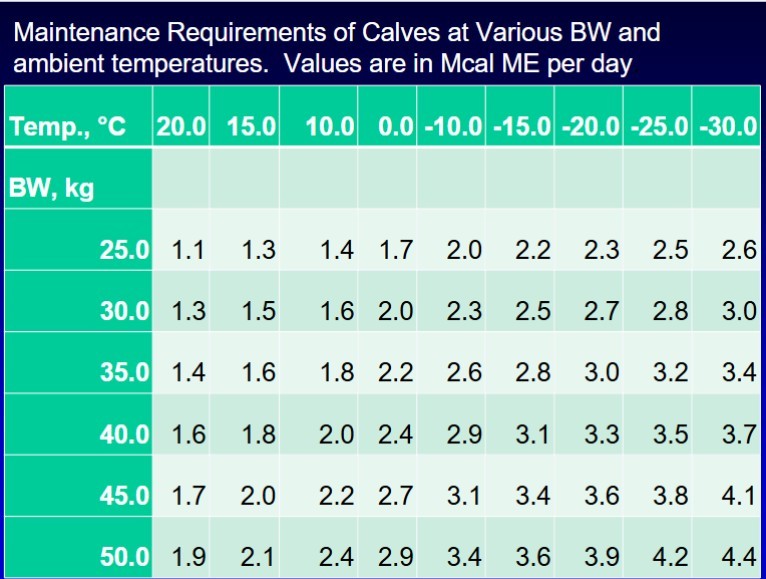
Table 1: Slide from Dr. Mike Van Amburgh, 2023
If you need help figuring out some small adjustments to your winter calf management that could make a big difference on your farm, please reach out. I am available to do free on-farm consultations and can help work with you to develop practical strategies that can help support your calves all winter long!
Contact information for Katie Callero: 607-422-6788 or krc85@cornell.edu
Field Crops
Dairy
Business
Livestock
Grains
Upcoming Events
Livestock Production Field Day
August 29, 2026 : Livestock Production Field Day
Chaffee, NY and East Aurora, NY,
Join us on visits to Horizon Ridge Farm in East Aurora and Troll Bridge Farm in Chaffee for an introduction to small beef and small diversified livestock enterprises. Through walking farm tours, attendees will learn about management, meat processing, setting prices, and finding local markets. Dinner will be provided. Register by contacting Amy Barkley at amb544@cornell.edu or 716-640-0844.
Poultry Processing Workshop, Naples, NY
September 17, 2026 : Poultry Processing Workshop - Naples, NY
Naples, NY
This program is one of four statewide roadshow stops across the state, offering farmers a full poultry processing experience. The class will teach skills that build confidence, reduce costs, and strengthen your farm's independence. This hands-on workshop gives farmers the chance to process a bird from start to finish, learning every step of the workflow used by small farms across the state.
Large Animal Awareness Training For First Responders
September 19, 2026
Dunkirk, NY
Join the Chautauqua County Technical Rescue Services and NYS Veterinarian, Dr. Kate Card-Allen, for a specialized training on how to safely and effectively respond to large animal incidents. Learn techniques for managing large animals during traffic accidents, rollovers, entrapments and other transportation emergencies.
Announcements
No announcements at this time.