
Lean Management for Dairy
Kate McDonald Polakiewicz, Farm Business Management Specialist
Southwest New York Dairy, Livestock and Field Crops Program
Running a dairy farm is a constant balancing act. You're managing cows, crops, employees, equipment, weather, milk prices, regulations — and somehow trying to get consistent, high-quality milk out the door every single day. There's not a lot of room for wasted time, wasted feed, or wasted effort.
Lean focuses on a central question: does this activity create value? On a dairy, value means producing high-quality milk efficiently, safely, and sustainably. Anything that doesn't directly support that goal is considered waste.
Waste doesn't always have to look obvious or dramatic—it could be cows standing too long in holding areas while waiting to be milked; equipment failures that could have been prevented; feed mixed in excess and thrown out; or employees walking back and forth unnecessarily for tools or supplies. On an individual level, these holdups may not seem like much, but they add up over time.
Labor time lost to disorganized processes can significantly cut into farm profitability. Hired labor is the second most expensive input on dairies in New York, after purchased feed costs. If employees can produce more output, add value, and reduce unnecessary expenses with the same or even reduced levels of effort, dairies can cut costs and increase profit.
One practical application of Lean on dairy farms is developing clearly defined, repeatable, standard operating procedures. Think about the milking routine. When everyone follows the same consistent protocol, cows experience less stress, milk letdown improves, and udder health benefits. Variability decreases. Performance becomes more predictable.
Don't underestimate the benefits of starting small. Lean emphasizes continuous improvement, rather than making significant overhauls in procedures. On a dairy, this could mean making changes to the parlor flow to reduce loading time or making supplies more readily available so that employees waste less time looking for them.
And finally, an important principle of Lean is respect for people and their work. You and your team are the ones who know the ins and outs of the processes on your farm. Utilizing the experiential knowledge of those who are most familiar with what it takes to do the work every day are often the ones who have the best ideas for making improvements.
In an industry shaped by tight margins and volatile milk prices, operational discipline can make the difference between surviving and thriving. At the end of the day, Lean is about intentional management. It encourages us to ask regularly: Is this the best way to do this? And if not, what small steps could make it better?
References
https://cals.cornell.edu/pro-d...

Field Crops
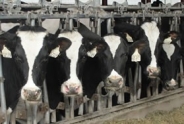
Dairy
Business
Livestock

Grains
Upcoming Events
Livestock Production Field Day
August 29, 2026 : Livestock Production Field Day
Chaffee, NY and East Aurora, NY,
Join us on visits to Horizon Ridge Farm in East Aurora and Troll Bridge Farm in Chaffee for an introduction to small beef and small diversified livestock enterprises. Through walking farm tours, attendees will learn about management, meat processing, setting prices, and finding local markets. Dinner will be provided. Register by contacting Amy Barkley at amb544@cornell.edu or 716-640-0844.
Poultry Processing Workshop, Naples, NY
September 17, 2026 : Poultry Processing Workshop - Naples, NY
Naples, NY
This program is one of four statewide roadshow stops across the state, offering farmers a full poultry processing experience. The class will teach skills that build confidence, reduce costs, and strengthen your farm's independence. This hands-on workshop gives farmers the chance to process a bird from start to finish, learning every step of the workflow used by small farms across the state.
Large Animal Awareness Training For First Responders
September 19, 2026
Dunkirk, NY
Join the Chautauqua County Technical Rescue Services and NYS Veterinarian, Dr. Kate Card-Allen, for a specialized training on how to safely and effectively respond to large animal incidents. Learn techniques for managing large animals during traffic accidents, rollovers, entrapments and other transportation emergencies.
Announcements
No announcements at this time.