
Rain vs. Herbicides
Katelyn Miller, Field Crops and Forage Specialist
Southwest New York Dairy, Livestock and Field Crops Program
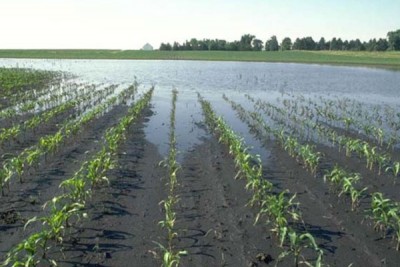
You don't need me to tell you that corn and soybean progress is all over the map throughout New York State. Our spring has made field activities difficult and has added an additional layer of stress to an already hectic time of year. As a result of staggered planting, herbicide application timings have been spread out over a significant portion of time. Regardless of whether your acreage was sprayed a few weeks ago or if applications have not yet been made, herbicide efficacy has likely been impacted by the wet weather.
Weeds and weed control are impacted by wet weather and subsequent flooding conditions for a variety of reasons. Wet weather conditions are stressful for plants, impacting the vigor of crops. This can impact the competitive interactions between our crop and weeds. This stress may cause weeds to not respond well to postemergence herbicides.
Driving on/working wet soils can lead to compaction affecting soil aeration, crop root system development, and future drainage. Avoiding traffic on fields because of these conditions can also cause us to delay or miss timely weed control events, allowing weeds to escape from the optimum planting window. While not as applicable now with our warm weather, many crops went in during a cool period. This delayed emergence and increases the risk of herbicide crop injury.
The chemical properties that impact herbicide persistence in the soil include water solubility, soil adsorption, and microbial degradation. The solubility of an herbicide in water helps determine its leaching potential (measured in ppm). Soil adsorption is the ability of herbicide molecules to bind to soil particle surfaces (measured in Koc). Other factors that impact herbicide leaching include soil characteristics, rainfall frequency and intensity, and herbicide concentration. Excessive rainfall can cause increased leaching of residual herbicides with high water solubility and low soil adsorption (think dicamba products like Banvel). Flooding can also physically move herbicide-treated soil, resulting in movement off-site or becoming concentrated in low spots.
Additionally, I've been in some fields where the soils have formed a crust because of the rainfall. Soil crusting and herbicides can interact in ways that affect our crop or herbicide efficacy. When a crop has to push through a soil crust, it creates extra stress from delayed emergence. This slowed emergence could result in increased uptake of an herbicide that exceeds the crops tolerance. If residual herbicides are applied after a crust has formed, they may remain on top of the soil, resulting in limited contact with germinating weeds or off-site movement as mentioned previously.
Some reminders about weed control and herbicides:
- If trying to make postemergence applications between rainfall events, check the product label for rainfast periods.
- Rain events may be associated with fluctuations in soil and air temperature, which can also affect weed vigor and, subsequently, herbicide performance.
- If weed control has failed, you may feel compelled to act rapidly to manage unwanted vegetation. Don't let haste lead to herbicide drift events.
- Weed escapes may be more prevalent sooner, so scouting will help catch escapes.
This spring's wet weather has made weed control more challenging. To manage these conditions, regular field scouting, careful herbicide timing, and attention to product guidelines are essential for minimizing weed escapes.
Resources
https://extension.psu.edu/excessive-rainfall-and-herbicides
https://agcrops.osu.edu/newsletter/corn-newsletter/2025-20/soil-crusting-and-herbicide-carryover
Field Crops
Dairy

Business

Livestock

Grains
Upcoming Events
Poultry Processing Workshop, Canandaigua, NY
September 17, 2026 : Poultry Processing Workshop - Canandaigua, NY
Canandaigua, NY
This program is one of four statewide roadshow stops across the state, offering farmers a full poultry processing experience. The class will teach skills that build confidence, reduce costs, and strengthen your farm's independence. This hands-on workshop gives farmers the chance to process a bird from start to finish, learning every step of the workflow used by small farms across the state.
Tax 101: An Introduction to Income Taxes for Farmers
September 17, 2026 : Tax 101: An Introduction to Income Taxes for Farmers
Join NY Farm Net for a FREE mid-day webinar about income tax basics for farmers. Attendees will learn what documents you need, options for recordkeeping systems, how identify common tax forms and schedules, and more!
Large Animal Awareness Training For First Responders
September 19, 2026
Dunkirk, NY
Join the Chautauqua County Technical Rescue Services and NYS Veterinarian, Dr. Kate Card-Allen, for a specialized training on how to safely and effectively respond to large animal incidents. Learn techniques for managing large animals during traffic accidents, rollovers, entrapments and other transportation emergencies.
Announcements
No announcements at this time.