
Practical Lessons Learned from Advanced Soil Health Training: Part 2
Katelyn Miller, Field Crops and Forage Specialist
Southwest New York Dairy, Livestock and Field Crops Program
In September, I discussed the soil health cohort I'm participating in and shared some valuable lessons I learned in the first session. In December, the second session took place, focusing on cover crops. It offered deeper insights into species selection, decision support tools, and root demonstrations. We also had the opportunity to connect with local producers who shared their experiences and advice for successfully implementing cover crops on their farms.
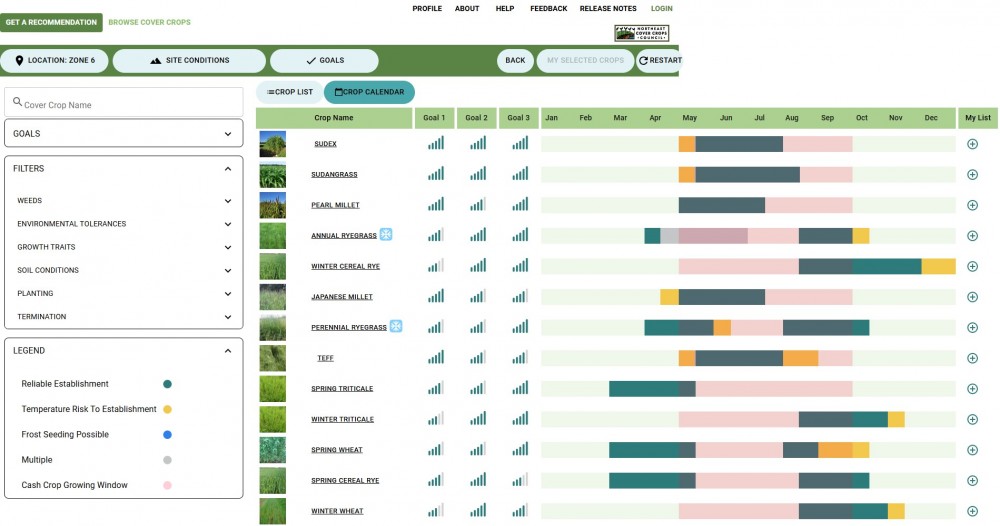
A significant part of the session was dedicated to cover crop decision support tools. These tools provide tailored recommendations for selecting cover crops based on climate, soil type, and other factors. The tool we focused on the most was the Species Selector Tool by the Northeast Cover Crop Council. This tool has you input your:
- location
- USDA Plant Hardiness Zone
- cropping window
- allows you to select up to 3 goals.
This data will provide you with cover crop options available for your location. The image below is an example of the results you can receive. It's calendar formatting allows the visualization of crop establishment windows.
Additionally, we covered other tools from Climate Smart Farming and Precision Sustainable Agriculture. They included the winter cover crop planting scheduler, cover crop nitrogen calculator, and an economic decision support tool. Tools like these can be used to optimize practices and support better decision-making for enhanced farm productivity and sustainability.
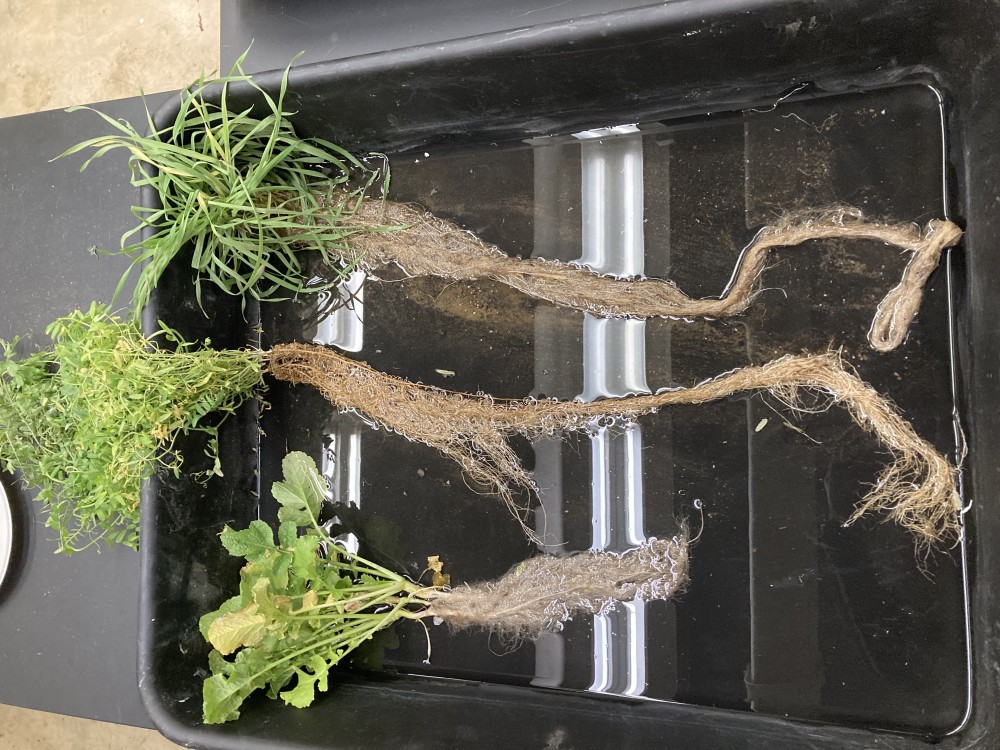
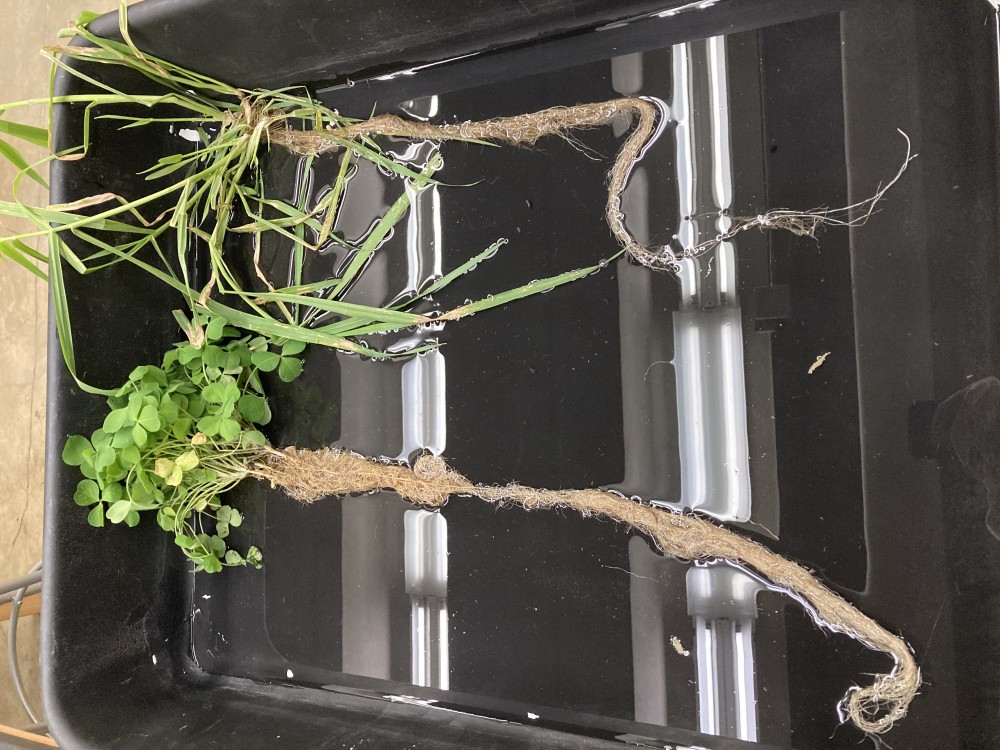
An important aspect of cover crops is the role of their root systems. To better understand this, we had the opportunity during the session to observe a root demonstration. This allowed us to visualize how different cover crop species develop root systems that improve soil porosity, increase water infiltration, and enhance nutrient cycling. By examining the various roots, we gained a deeper understanding of their impact on soil structure. All the cover crops shown below were grown for 56 days within a greenhouse. Take note of both the shoot and root growth. It's important to remember that there is a tradeoff between making roots and making shoots.
From left to right: radish, vetch, cereal rye
From left to right: clover, oats
While we focus heavily on the soil health benefits of cover crops, there may be additional advantages. One area of interest is the impact of cover crops, specifically cereal rye, on pest management. Previous studies have shown that no-till soybeans planted into cereal rye residue can enhance weed management, improve soil health, and reduce labor requirements, particularly in organic systems. However, there has been limited data on how cereal rye might influence white mold suppression in no-till systems.
Recent research has shown cereal rye residue can reduce the incidence of sclerotia germination, a key factor in white mold development. Sclerotia typically germinate under favorable conditions and lead to disease outbreaks in crops. However, if sclerotia fail to germinate or produce non-functional germination, they do not contribute viable inoculum. This essentially means that they die off over time. This reduction in inoculum could have long-term benefits, as it may lower the risk of disease recurrence in future crops. These findings highlight how cover crops like cereal rye can serve not only as a tool for improving soil health but also as a valuable component of integrated pest management strategies, further enhancing their value on the farm.
Finally, I want to share some of the insight I gained from the producer panel. We were able to hear from two New York farmers on their experiences with cover crops. During the discussion, there were three distinct messages that I gathered.
1. Selecting cover crops depends on a variety of factors. You should select based on your goals, soil type, climate, etcetera, but there are some additional factors to consider. Most notably, timing of planting, cost, and availability of seed. It's important to select an option that is cost effective in your budget and accessible. Additionally, the cover crop you select depends on the time of year in which its being planted.
2. Cover crops should be considered as part of your crop rotation, and not just as a filler. Ideally, cover crops should work as part of your full crop rotation and should help break up crop types and pest cycles.
3. It's important to have a plan to terminate. For whatever method you decide (mowing, tillage, crimping, herbicides), it's important to have a plan. Being prepared with your termination method will allow you to be prepared when the opportunity arises.
As you plan for the future, keep in mind the role cover crops can play in improving soil and crop health. If you're considering cover crops, now is the time to explore your options, plan, and take action. If you have questions about incorporating cover crops into your operation, contact Katelyn Miller by calling 716-640-2047 or by emailing km753@cornell.edu.
Field Crops
Dairy
Business
Livestock
Grains
Upcoming Events
Dairy Feeder School
October 29, 2026 : Dairy Feeder School
Freedom, NY
- One day on-farm training for dairy farm feeders
- Offered in English and Spanish
- Stations with hands-on activities/demos
Tax 102: Tax planning and strategies for Farmers
November 4, 2026 : Tax 102: Tax planning and strategies for Farmers
This webinar follows the "Introduction to Income Taxes" webinar from September, going more into depth on topics including: understanding common tax concepts, tax strategies, long-term approaches to managing taxes, and more!
Labor Roadshow: Practical Workforce Strategies for Agricultural Professionals Across New York
November 30, 2026
December 21, 2026
The Agricultural Workforce Development Council of New York State (AWDC) will celebrate a decade of connecting and educating agricultural professionals when Labor Roadshow X returns this December with five in-person events and two webinars across New York State.
For nearly ten years, the Labor Roadshow has brought agricultural professionals together to learn, connect, and navigate the evolving challenges of agricultural labor. The 2026 event will continue that tradition with timely, expert-led discussions focused on the issues affecting farms and agricultural employers today—including labor law and compliance, employee engagement, retention, and workplace culture.
Announcements
No announcements at this time.