
The Tillage Toolbelt: Soil Structure
By John Pirrung, Field Technician, SWNYDLFC Team
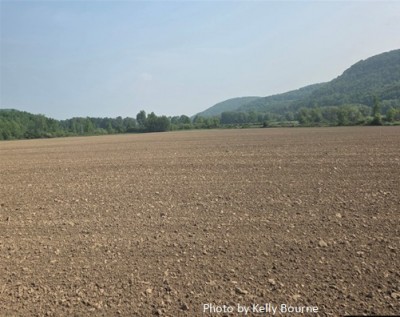
Continuing this series from last month, we're taking a look at all of the differences between tilling and no-till systems to help you figure out which system is best for your farm. We previously looked at how tillage decisions impact nutrient cycling, and this time we're considering how the same decisions can change soil structure. Your choice to till or not to till can significantly change your soil structure, determining what kinds of challenges may appear or which may be avoided.
WHY IS SOIL STRUCTURE IMPORTANT?
The structure of your soil affects how well water, air, and nutrients move through the soil profile, which directly impacts plant growth. Poor soil structure can contribute to erosion, flooding, and weaker plants. Better soil structure supports healthier crops and can help your operations remain sustainable and more resilient in the face of extreme weather events.
UNDERSTANDING SOIL STRUCTURE:
When talking about soil structure, there are a few key concepts and processes that are important to understand:
Infiltration
What it is:
• Infiltration is the process by which water can penetrate the soil surface and move deeper underground, with the potential to become trapped in soil pores and made available over longer periods of time
• This is often measured as an infiltration rate, which is how fast water can penetrate into soil in a given period of time
Why it matters:
• Infiltration determines how much water can enter and become stored in the root zone
• Poor infiltration can force water to accumulate on the soil surface, flooding fields and contributing to erosion
• Better infiltration reduces surface runoff, and can allow water to percolate down and resupply underground water storage
Compaction
What it is:
• Soil compaction is the process of soil particles being pressed closer together, reducing available pore spaces
- Wet soils with poor aggregation are particularly vulnerable to compaction
Why it matters:
• Reduced pore space means that everything from roots and fungi to water and oxygen have more difficulty moving around
• Compacted soils exhibit restricted root growth, reduced water infiltration, poor drainage, inconsistent nutrient exchange, and less microbial habitat
Aggregate Stability
What it is:
• Aggregates are clumps of soil particles (organic matter, sand, silt, clay) that bind together in varying sizes, often as a result of biological activity (growing roots, earthworms, fungi)
• Aggregate Stability refers to how well the aggregates can resist breaking apart when exposed to disruptive forces, such as rain or tillage
Why it matters:
• Aggregates improve aeration and water infiltration, and make it easier for roots to penetrate deeper into the soil
• Stable aggregates resist erosion from wind or water, reducing soil loss
• Aggregates stabilize nutrients within pores and create habitats for beneficial microorganisms
Surface Crusting
What it is:
• Crusting is the formation of a thin, dense layer at the soil surface that has lower porosity and higher penetration resistance compared to the underlying soil
• Crusting can occur more easily when aggregates have been broken up, like after many freeze-thaw cycles in early spring
Why it matters:
• Hard crusts can reduce water infiltration and promote runoff and erosion
• Seedlings may struggle to push through crusts, leading to patchy germination
• Crusts reflect sunlight, reducing how quickly soil can warm up or dry out
With these concepts in mind, now we can take a look at how tillage decisions change the structure of our soils.
WATER RETENTION & DRAINAGE
Tillage
Improves short-term drainage
• Temporarily improves water infiltration
• Reduces surface water runoff from previously crusted soils
Reduces long-term water retention
• Breaks up healthy soil aggregates
• Increases evaporation
No-till
Improves long-term water retention
• Reduces evaporation
• Surface residue assists with infiltration
Reduced drainage, especially in early years
• Slower infiltration at first due to dense surface
• Infiltration improves over time as aggregates form
SOIL TEMPERATURE
Tillage
Warms faster in spring
• Exposed soil + reduced moisture = quicker warming
• Helpful for earlier planting
No-till
Warms slower
• Crop residue reflects sunlight and retains moisture, both of which delay soil warming
• Can delay planting
SOIL AERATION
Tillage
Increased short-term aeration, especially near the surface
• Loosening the soil allows more oxygen to enter
Can lead to compaction over time
• Especially below the tilled layer (plow pan) reducing deep aeration
No-till
Will reduce surface aeration initially
• Surface compaction or residue layers can restrict airflow
Improved long-term aeration
• Root channels and earthworm activity enhance natural porosity
SOIL AGGREGATION
Tillage
Destroys soil aggregates
• Breaks down natural soil structure
Leads to crusting and compaction
• Compounds over time
No-till
Improves soil structure over time
• Allows aggregates to form and persist
Reduces erosion and crusting
• Residue protects soil and improves stability
As always, there's no one-size-fits-all answer. Consider what the most frequent or most challenging issues are for you and your farm. Are you finding that your soil is always too wet or too cold to plant on time? Then tilling may be the right pick for you. Are you struggling to retain enough water to get your crops through a dry spell? Then no-till might give you some better results. Think about the challenges that are costing you the most time and money, and see if your soil structure is contributing to those challenges.
Sources:
• https://extension.psu.edu/soil...
• https://extension.psu.edu/soil...
• https://extension.psu.edu/soil...
• https://extension.arizona.edu/...
• https://extension.umn.edu/grow...
• https://www.canr.msu.edu/drain...
Field Crops
Dairy
Business
Livestock
Grains
Upcoming Events
Poultry Processing Workshop, Canandaigua, NY
September 17, 2026 : Poultry Processing Workshop - Canandaigua, NY
Canandaigua, NY
This program is one of four statewide roadshow stops across the state, offering farmers a full poultry processing experience. The class will teach skills that build confidence, reduce costs, and strengthen your farm's independence. This hands-on workshop gives farmers the chance to process a bird from start to finish, learning every step of the workflow used by small farms across the state.
Tax 101: An Introduction to Income Taxes for Farmers
September 17, 2026 : Tax 101: An Introduction to Income Taxes for Farmers
Join NY Farm Net for a FREE mid-day webinar about income tax basics for farmers. Attendees will learn what documents you need, options for recordkeeping systems, how identify common tax forms and schedules, and more!
Large Animal Awareness Training For First Responders
September 19, 2026
Dunkirk, NY
Join the Chautauqua County Technical Rescue Services and NYS Veterinarian, Dr. Kate Card-Allen, for a specialized training on how to safely and effectively respond to large animal incidents. Learn techniques for managing large animals during traffic accidents, rollovers, entrapments and other transportation emergencies.
Announcements
No announcements at this time.