
Local Frost Advisories - What it Could Mean for Corn Producers in Southwest New
Joshua Putman, Field Crops and Forage Specialist
Southwest New York Dairy, Livestock and Field Crops Program
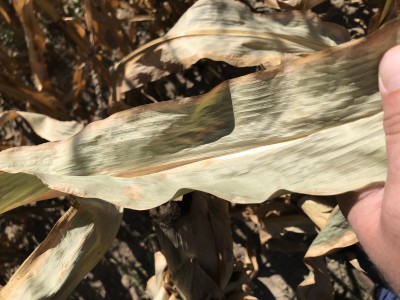
Frost can mean yield loss for crop producers, although the severity of damage varies based on crop maturity, topographical features and local climate conditions. A corn-killing freeze occurs when temperatures fall to 32 F for several hours or 28 F for a few minutes.
Damage occurs from freezing temperatures because living plant tissues contain water. As ice crystals form, they expand and puncture cell walls. As the temperatures rise during the morning, the ice crystals melt back to a liquid. The punctured cells lose water and nutrients and die. Frost damaged plant tissue often has a water-soaked appearance. This appearance later turns into brown, dead plant tissue. Damage will start to show up 1 to 2 days after a frost has occurred.
Late-season frost damage can affect grain quality and yield and is directly proportional to the stage of maturity and leaf tissue killed. Severe impacts on grain quality can occur at mid-dough, while moderate impacts are seen at the dent stage. By the time the kernel has reached half milk line, only minor impacts will occur to grain quality. Yield losses are negligible if frost occurs when grain moisture is below 35 percent. Differences among hybrids, overall plant vigor at the time of frost, and subsequent temperatures will all affect final grain quality and yield.
Severe plant tissue damage can lead to defoliation. If you suspect your corn has been damaged by frost, you should consider consulting the National Corn Handbook NCH-1 "Assessing Hail Damage to Corn" (Vorst, 1990). This publication has charts used by the National Crop Insurance Association for assessing yield loss due to defoliation. Knowing how to recognize frost damage and assess probable loss is important for decision making. An abbreviated version of the loss chart is shown in Table 7 below. For example, corn that was defoliated 20% at the milk stage would have 3% yield loss.
Frost damage can be difficult to identify late in the season as it is easily confused with common fungal leaf diseases such as northern corn leaf blight. If you have questions regarding the condition of your corn crop or if you don't have access to an electronic version of the "Assessing Hail Damage to Corn" guide, contact Josh Putman. For more information on corn maturity and frost, visit https://www.agry.purdue.edu/ex...
Field Crops
Dairy
Business
Livestock
Grains
Upcoming Events
Poultry Processing Workshop, Canandaigua, NY
September 17, 2026 : Poultry Processing Workshop - Canandaigua, NY
Canandaigua, NY
This program is one of four statewide roadshow stops across the state, offering farmers a full poultry processing experience. The class will teach skills that build confidence, reduce costs, and strengthen your farm's independence. This hands-on workshop gives farmers the chance to process a bird from start to finish, learning every step of the workflow used by small farms across the state.
Tax 101: An Introduction to Income Taxes for Farmers
September 17, 2026 : Tax 101: An Introduction to Income Taxes for Farmers
Join NY Farm Net for a FREE mid-day webinar about income tax basics for farmers. Attendees will learn what documents you need, options for recordkeeping systems, how identify common tax forms and schedules, and more!
Large Animal Awareness Training For First Responders
September 19, 2026
Dunkirk, NY
Join the Chautauqua County Technical Rescue Services and NYS Veterinarian, Dr. Kate Card-Allen, for a specialized training on how to safely and effectively respond to large animal incidents. Learn techniques for managing large animals during traffic accidents, rollovers, entrapments and other transportation emergencies.
Announcements
No announcements at this time.