
Frost Bite Mitigation and Management in Ruminants
Amy Barkley, Team Leader & Livestock Specialist
Southwest New York Dairy, Livestock and Field Crops Program
Frost Bite Mitigation and Management in Ruminants
By Amy Barkley, Livestock Specialist SWNYDLFC
January and February are the coldest months of the year for those in WNY, and our climate means that we often have nights that are not only cold, but also windy and snowy. For those calving, lambing, and kidding this time of year, frost bite on the youngsters is a real concern because the wind and snow lower the effective temperature below what we're reading on the thermometer. The good news is that while we can't control Mother Nature, we can manage around the worst weather to help reduce the risk of frostbite and assist animals that are affected.
Frostbite is not life-threatening but can cause disfiguration and potential issues later in life. Once young animals are born and dried off, their fluffed hair coat and belly full of mom's milk make them resilient. Before being dried off, newborns are susceptible to chilling. They're also vulnerable if they become damp and exposed to sub-freezing temperatures after being dried off. In extremely cold temperatures, frostbite may happen from exposure to the cold alone.
Ears, tails, and toes are the most isolated from the body's core and don't get the volume of blood flow needed to keep them protected. While the main part of the body is not usually affected by cold because of the sheer mass and blood flow, in very cold conditions, the body temperature may start to drop. An animal will move into preservation mode by keeping the core body temperature within operable range, which involves moving blood into the core and restricting it in the extremities. When this happens, tissues aren't warmed or oxygenated well and can freeze and die. The body naturally gets rid of dead tissues through self-amputations. While the nerves in the damaged tissue are dead, they are sensitive where the live tissue connects, making the condition painful.
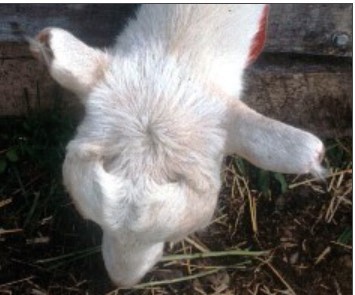
Animals with symptoms of the beginnings of dry gangrene may show a red line on the skin around the affected area and the skin will feel very cold to the touch. Over time, the tissue becomes black and dry. Depending on the severity of the loss, pain the animal is in, and incidence of infection, intervention may be needed. This can include a veterinarian removing the dead tissue, treating with antibiotics to reduce the spread of infections, and prescribing pain medications to reduce discomfort. Keep watch over the affected areas for swelling, discoloration, and hair loss, and involve your veterinarian for a second opinion, especially for large affected areas or if the back legs are affected.
The highest-risk animal group is newborns, since they have a minimal amount of body fat and are born wet. If the weather is going to be below freezing, keep these tips in mind to reduce the incidence of frost bite:
·Keep young animals in a protected area out of cold, wind, and precipitation.
· Add a heat lamp in an area that young animals can access, but adults can't for safety reasons. Heat lamps are meant to heat the air around the animal to keep it warm, not heat the animal directly.
· Dry off newborns ASAP. Dampness intensifies the effects of cold. If you know animals are birthing, increase the frequency of checks to ensure youngsters are dried off.
· Ensure that all newborns are nursing. If they are not, check their body temperature and warm if needed so that they'll accept milk. If the mother refuses them, ensure they get colostrum and milk by supplemental feedings or grafting them onto another lactating female. All supplemental feed should be warmed to between 101 - 105 degrees Fahrenheit before offering it.
· If skin shows symptoms of frost bite, do not apply direct heat above 105 F or rub the skin vigorously. This can damage the tissues more. Applying direct heat and rubbing can be performed to increase the temperature of the core body, though.
· Frost damaged areas can be wrapped loosely in towels warmed by the dryer or a well-padded heating pad on low.
· Do not apply bandages to affected areas as to not interfere with circulation.
· Keep a newborn with previously frozen/thawed extremities in an area above freezing for a few days to prevent re-freezing, which is very common in vulnerable individuals in persistently cold temperatures.
When caught early enough and initial treatments are performed, the tissue may recover, rather than becoming gangrenous and falling off. It can take 3-6 weeks to determine where the exact line is between affected and normal tissue. Therefore, amputation is not usually recommended immediately. This all said, prevention is better than reaction and treatment.
Resources for further reading:
Dealing with Frostbite on Lambs and Kids by Dr. Tatiana Stanton https://swnydlfc.cce.cornell.edu/submission.php?id=1455&crumb=livestock
Frostbite in Cattle by Dr. Dee Whittier https://www.sites.ext.vt.edu/n...
Photograph of kid with frostbitten ears by Dr. tatiana Stanton.
Field Crops
Dairy
Business
Livestock
Grains
Upcoming Events
Livestock Production Field Day
August 29, 2026 : Livestock Production Field Day
Chaffee, NY and East Aurora, NY,
Join us on visits to Horizon Ridge Farm in East Aurora and Troll Bridge Farm in Chaffee for an introduction to small beef and small diversified livestock enterprises. Through walking farm tours, attendees will learn about management, meat processing, setting prices, and finding local markets. Dinner will be provided. Register by contacting Amy Barkley at amb544@cornell.edu or 716-640-0844.
Poultry Processing Workshop, Naples, NY
September 17, 2026 : Poultry Processing Workshop - Naples, NY
Naples, NY
This program is one of four statewide roadshow stops across the state, offering farmers a full poultry processing experience. The class will teach skills that build confidence, reduce costs, and strengthen your farm's independence. This hands-on workshop gives farmers the chance to process a bird from start to finish, learning every step of the workflow used by small farms across the state.
Large Animal Awareness Training For First Responders
September 19, 2026
Dunkirk, NY
Join the Chautauqua County Technical Rescue Services and NYS Veterinarian, Dr. Kate Card-Allen, for a specialized training on how to safely and effectively respond to large animal incidents. Learn techniques for managing large animals during traffic accidents, rollovers, entrapments and other transportation emergencies.
Announcements
No announcements at this time.