
Don't Put All Your Seeds in One Basket
Katelyn Miller, Field Crops and Forage Specialist
Southwest New York Dairy, Livestock and Field Crops Program
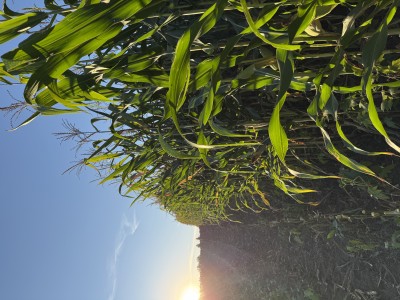
Harvest has been stretched out for many, but nonetheless, it's time to start thinking about ordering seed for the 2026 growing season. Winter is a good time to look back upon the last season and evaluate what went well and what didn't. Variety trial reports are also starting to become available, which can guide smart seed decisions.
This growing season was less than ideal, causing yield and quality fluctuations across fields. We can't control the weather, but we can select hardy varieties that can tolerate more extremes. Seed availability is also shifting, such as the upcoming production halt of BMR corn. Picking out seed early increases your chances of being able to get the exact hybrids you want, as certain trait packaging or maturities may be limited in quantity, giving me to source other options if needed.
When evaluating variety trials, it's not advisable to choose solely from the top-yielding varieties, as many factors beyond genetics influence yield. Consider your microclimate, soil type, drainage class, planting dates, and general management intensity compared to trial conditions. A top yielder in a trial doesn't automatically make it the best fit for you. Look at the weather data; compare the location's annual rainfall amounts and growing degree day accumulations to your own. Reviewing historical data can help determine whether weather contributed to a variety's performance.
Diversifying your seed selection is one way to spread risk across your acres. Spread out harvest maturities, select varieties based on soil types, and choose hybrids that align with varying management intensities. It can be advantageous to split your portfolio with proven genetics and up-and-coming hybrids that may offer improved traits and stress tolerance. Don't put all your seeds in one basket; if one hybrid struggles under certain conditions, others may help balance it out.
Don't be afraid to test things out on your farm. Look at stand counts, soil maps, and yield maps (if you have them) to see how different hybrids respond. Pay close attention to high-stress areas such as compacted zones, drought-prone pockets, or places with high water tables. These areas can help highlight how hardy, or sensitive, a variety is. Over me, you should be able to evaluate which hybrids give you consistent performance, even in less than desirable conditions.
Your harvesting strategy should play a role as well. There can be meaningful differences between choosing hybrids for grain versus silage. Think about what you need; standability through fall, nutritional value for livestock, or dry down speed. Matching characteristics to your goals can help avoid bottlenecks and keep your harvest window manageable.
Consider common stressors on your farm. Do certain diseases show up year after year? Diseases like white mold and northern corn leaf blight, along with other regional pressures, can chip away at yield.
Talk it out with your seed representatives. They often have insights from the wider region, know how hybrids respond under a range of conditions, and can help you match varieties to your goals. Sharing information about your fields, management style, and concerns can help them steer you towards a balanced hybrid lineup.
The best seed plan is one that spreads your risk and strengthens your acres. By mixing maturities, trying new genetics, and matching varieties to your fields and goals, you can set yourself up for a strong season.
Field Crops
Dairy
Business
Livestock
Grains
Upcoming Events
Livestock Production Field Day
August 29, 2026 : Livestock Production Field Day
Chaffee, NY and East Aurora, NY,
Join us on visits to Horizon Ridge Farm in East Aurora and Troll Bridge Farm in Chaffee for an introduction to small beef and small diversified livestock enterprises. Through walking farm tours, attendees will learn about management, meat processing, setting prices, and finding local markets. Dinner will be provided. Register by contacting Amy Barkley at amb544@cornell.edu or 716-640-0844.
Large Animal Awareness Training For First Responders
September 19, 2026
Dunkirk, NY
Join the Chautauqua County Technical Rescue Services and NYS Veterinarian, Dr. Kate Card-Allen, for a specialized training on how to safely and effectively respond to large animal incidents. Learn techniques for managing large animals during traffic accidents, rollovers, entrapments and other transportation emergencies.
Cows, Crops & Critters - Southwest New York Dairy, Livestock & Field Crops Newsletter Sponsorship
December 18, 2026
Our two forms of publications feature research-based and timely information from our four specialists, listed to the right, along with local event notifications and Cornell University outreach. This information is provided to participants who range from dairy, livestock, and field crops producers to agricultural suppliers and consultants.
Weekly Email Update: Shared with 625+ households who have signed up with our program.
Monthly Paper Mailer: To reach our stakeholders and farmers who lack internet access, we send out a monthly mailer where your company's logo and contact information would be featured with a mailing list of 330+ households.
If you sponsor our weekly and monthly publications you reach approximately 955 households.
Visit our website to view our newsletters!
Announcements
No announcements at this time.