
Selecting Seed Varieties
Katelyn Miller, Field Crops and Forage Specialist
Southwest New York Dairy, Livestock and Field Crops Program
As we round out corn season, it's time to look back at the passing season and think about seed selection for next year. Here are some tips to keep in mind to help you select seed that fits your operational needs.
1. Evaluate Return on Investment (ROI):
Yield potential is a desirable trait, but it's easy to place too much emphasis on it. When you think about the input costs needed to achieve high yields (seed, fertilizer, pesticides, etc.), profits may be slim. At the end of the day, the goal of selecting seed should be cost-effectiveness. Evaluating your ROI can help determine yield potential and the input costs for successful crop production.

2. Agronomic Traits:
Agronomic traits can have a direct impact on your crop. They can affect maturity, plant height, yield potential, and stalk strength.
- Maturity:
- Selecting the maturity that matches your growing season is crucial. Not only does the right maturity ensure proper crop maturation, but it can also be used as a management tool. Utilizing multiple maturities can help mitigate production risks and provides an opportunity to develop a harvest timeline.
- Plant Height:
- Corn plants can be of various heights presenting different management challenges and opportunities. Select what works best for your equipment capabilities and current pest management strategies.
- Yield Potential:
- Under specific conditions, yield can be affected by ear size, kernel count, and plant health.
- Stalk Strength and Standability:
- A strong stalk can support the weight of developing ears. Stalks with good standability are less likely to lodge, causing additional losses.
3. Environmental Conditions:
Pay attention to your local climate and weather conditions. Different factors will impact your seed selection. Factors include temperature, precipitation, soil type, and the length of growing season. Today, many varieties are bred or selected to enhance their ability to handle stressors including, but not limited to; extreme heat, drought, excessive rainfall, and cold/wet soils. Look back at previous seasons on your farm. Do you have frequent issues with weather extremes? Is planting delayed because your soil takes a long time to warm up? Think about this when selecting your seed variety.
4. Plan for Pests:
Pests are any living organism that may impact crop production. This includes insects, diseases, weeds, and much more. Consider these pest pressures that you find in your fields. Are there diseases you find year after year? Do you find yourself spraying insecticides for a pest often? Consider this when thinking about using Bt traits with your seed. Check out this handy Bt trait table for more information on trait packages: https://www.texasinsects.org/uploads/4/9/3/0/49304017/bttraittable_feb_2023.pdf. These traits can help manage disease and insects but be sure to rotate the Bt trait you are utilizing. Repeatedly using the same trait will increase the risk of resistance developing in the pest populations.
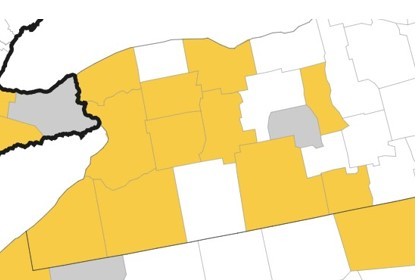
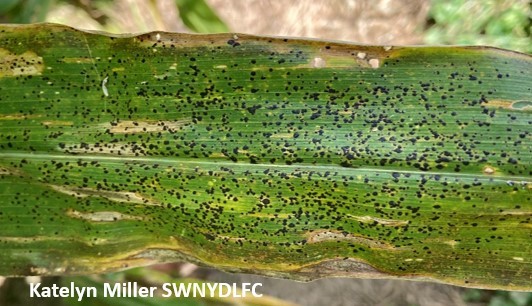
Paying attention to your current pest concerns is important, but it's also crucial to keep up with developing challenges. For example, tar spot is a new corn disease which entered NYS in 2021. This year, tar spot was identified in 11 NY counties, meaning that inoculum is locally present. With inoculum present, it's important to be prepared to reduce your production risk. Chat with your local seed representative to see if they have options available.
Pulling these tips together will allow you to evaluate this season and prepare for the next. The 2023 variety trial data has not been released yet, so check out 2022's for now: https://ecommons.cornell.edu/server/api/core/bitstreams/15f8ccf4-b55b-429f-ac7b-674159436752/content. These trials serve to evaluate how varieties perform in different locations and local climates. Look at how the varieties performed in a location like yours. If you would like help evaluating the variety trails, or want to discuss the tips above, contact Katelyn Miller at 716-640-2047 or km753@cornell.edu.
Field Crops
Dairy
Business
Livestock
Grains
Upcoming Events
Livestock Production Field Day
August 29, 2026 : Livestock Production Field Day
Chaffee, NY and East Aurora, NY,
Join us on visits to Horizon Ridge Farm in East Aurora and Troll Bridge Farm in Chaffee for an introduction to small beef and small diversified livestock enterprises. Through walking farm tours, attendees will learn about management, meat processing, setting prices, and finding local markets. Dinner will be provided. Register by contacting Amy Barkley at amb544@cornell.edu or 716-640-0844.
Large Animal Awareness Training For First Responders
September 19, 2026
Dunkirk, NY
Join the Chautauqua County Technical Rescue Services and NYS Veterinarian, Dr. Kate Card-Allen, for a specialized training on how to safely and effectively respond to large animal incidents. Learn techniques for managing large animals during traffic accidents, rollovers, entrapments and other transportation emergencies.
Cows, Crops & Critters - Southwest New York Dairy, Livestock & Field Crops Newsletter Sponsorship
December 18, 2026
Our two forms of publications feature research-based and timely information from our four specialists, listed to the right, along with local event notifications and Cornell University outreach. This information is provided to participants who range from dairy, livestock, and field crops producers to agricultural suppliers and consultants.
Weekly Email Update: Shared with 625+ households who have signed up with our program.
Monthly Paper Mailer: To reach our stakeholders and farmers who lack internet access, we send out a monthly mailer where your company's logo and contact information would be featured with a mailing list of 330+ households.
If you sponsor our weekly and monthly publications you reach approximately 955 households.
Visit our website to view our newsletters!
Announcements
No announcements at this time.