
Herbicide Supplies and Storage during the Winter
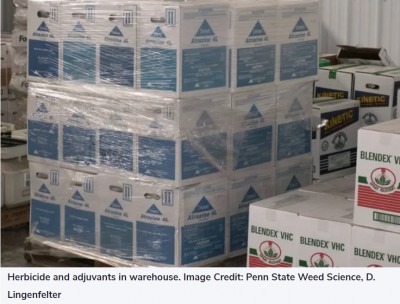
By Dwight Lingenfelter: Penn State Extension
Again, this year, there is a lot of speculation about potential herbicide shortages and price increases on some products for the 2023 growing season. Overall, it does not seem as grim as last year, but indications are that supplies of glyphosate (Roundup, others) and metribuzin should be adequate but likely not back to levels and costs prior to the pandemic. Products such as glufosinate (Liberty, others), metolachlor (plus other group 15 herbicides), atrazine, dicamba, and 2,4-D might be in shorter supply and with higher prices. Also, some products that are packaged in smaller sizes (e.g., 2.5-gallon jugs) might be limited but other sizes such as totes should be more readily available. Furthermore, with volatile supply chain issues involving many aspects of production ag these days, some are asking if it is wise to purchase bulk inventory of herbicides and/or other pesticides. The short answer is yes, if it makes sense economically, it could be a good idea to start making purchases on some of these inputs. Begin now by working with your dealer to discuss these issues. The intent is not to stockpile products but to have a modest supply for use during the next growing season. However, you must keep in mind appropriate storage parameters, namely issues regarding freezing of pesticide products during the winter months. In general, freezing temperatures can change and negatively affect the chemistry of some pesticides inside the container and can also damage the container itself. Premixed liquid products that contain multiple active ingredients seem to be affected more so by low temperatures than single active ingredient products. Some premixes tend to separate in the container and can be difficult to get back into a homogeneous liquid prior to use in the spring. Make sure to read the label for storage instructions. But as a general rule, pesticides are best stored between 40-90°F. For more details and many useful links, please refer to the National Pesticide Information Center's Storage of Pesticides webpage. Another good resource is Penn State's Effect of Cold Temperatures on Pesticides article.
Field Crops
Dairy

Business
Livestock
Grains
Upcoming Events
Livestock Production Field Day
August 29, 2026 : Livestock Production Field Day
Chaffee, NY and East Aurora, NY,
Join us on visits to Horizon Ridge Farm in East Aurora and Troll Bridge Farm in Chaffee for an introduction to small beef and small diversified livestock enterprises. Through walking farm tours, attendees will learn about management, meat processing, setting prices, and finding local markets. Dinner will be provided. Register by contacting Amy Barkley at amb544@cornell.edu or 716-640-0844.
Large Animal Awareness Training For First Responders
September 19, 2026
Dunkirk, NY
Join the Chautauqua County Technical Rescue Services and NYS Veterinarian, Dr. Kate Card-Allen, for a specialized training on how to safely and effectively respond to large animal incidents. Learn techniques for managing large animals during traffic accidents, rollovers, entrapments and other transportation emergencies.
Cows, Crops & Critters - Southwest New York Dairy, Livestock & Field Crops Newsletter Sponsorship
December 18, 2026
Our two forms of publications feature research-based and timely information from our four specialists, listed to the right, along with local event notifications and Cornell University outreach. This information is provided to participants who range from dairy, livestock, and field crops producers to agricultural suppliers and consultants.
Weekly Email Update: Shared with 625+ households who have signed up with our program.
Monthly Paper Mailer: To reach our stakeholders and farmers who lack internet access, we send out a monthly mailer where your company's logo and contact information would be featured with a mailing list of 330+ households.
If you sponsor our weekly and monthly publications you reach approximately 955 households.
Visit our website to view our newsletters!
Announcements
No announcements at this time.