
When it the Right Time to Castrate Bulls by Jeff Robe
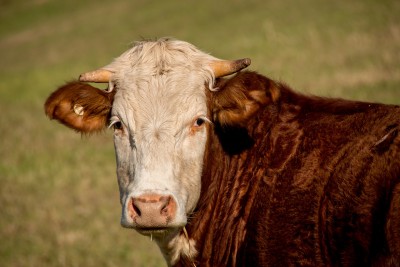
When is the right time to castrate bulls?
Jeff Robe, Oklahoma Quality Beef Network Coordinator
The practice of castrating animals goes back to ancient times. Egyptian farmers found castrating bovine bulls made the animal much easier to handle. It's doubtful the Egyptians were concerned about the value-added components of their animals. But today, adding value to market cattle is the name of the game and castration is a key component to any preconditioning program that can greatly influence market price premiums or discounts, especially in older bull calves.
Castrating bull calves has become common practice in U.S. beef herds. In 2017, the USDA-APHIS NAHMS Beef Cow Calf study indicated that 62% of commercial cow-calf herds used castration methods in their management practices. Castration has provided economic benefits to both the cow-calf producer and feedlot operators through increased market prices and meat quality. Castration also decreases unwanted pregnancy and increases the safety of workers and other animals.
There is a perceived notion that intact bulls have an advantage in body weight gains during the preweaning period and post greater weaning weights than calves castrated at or near birth. However, numerous studies have shown the weaning weights are similar for bulls and steers (approx. 600 lbs.). Advantages in calf weight gain due to testosterone production are presumably realized at a time following average weaning dates closer to puberty.
The timing of castration can influence weight gain and stress management. Studies examining how timing of castration effects average daily gains (ADG) in cattle castrated either in early life (birth to 2 mo.) or those castrated at weaning or post-weaning (6-10 mo.) demonstrated higher ADG during the post-weaning period in the early castrated calves (approx. 0.30 lbs/day greater) than those castrated at or after. The period calves experience weight loss post-castration increases with age as does risk of disease susceptibility. The stress experienced is also related to the time of castration as the level of discomfort and trauma increases with the size of testicles. Calves castrated at 5 ½ months of age or later experienced a greater duration of stress than those castrated at birth or at branding.
Bull calves entering the stocker or feedlot segments of the industry have numerous health and performance factors associated with late life castration such as increased risk or morbidity and mortality, sick treatments and decreased ADG. Therefore, price discounts for bull calves being sold at market can be substantial when compared to steers marketed in the same weight class. Lighter weight bulls (300-400 lbs.) are viewed as less risky, and discounts are generally minimal if any. As the weight of a bull increases, so does the risk. Discounts can average $6-12/cwt or $30-60 per head.
A herd management practice that dates to ancient times and still used today has clearly proven beneficial. Utilizing the practice and with a timing that makes sense may be the difference between dollars made or dollars lost.

Field Crops
Dairy

Business
Livestock

Grains
Upcoming Events
Livestock Production Field Day
August 29, 2026 : Livestock Production Field Day
Chaffee, NY and East Aurora, NY,
Join us on visits to Horizon Ridge Farm in East Aurora and Troll Bridge Farm in Chaffee for an introduction to small beef and small diversified livestock enterprises. Through walking farm tours, attendees will learn about management, meat processing, setting prices, and finding local markets. Dinner will be provided. Register by contacting Amy Barkley at amb544@cornell.edu or 716-640-0844.
Large Animal Awareness Training For First Responders
September 19, 2026
Dunkirk, NY
Join the Chautauqua County Technical Rescue Services and NYS Veterinarian, Dr. Kate Card-Allen, for a specialized training on how to safely and effectively respond to large animal incidents. Learn techniques for managing large animals during traffic accidents, rollovers, entrapments and other transportation emergencies.
Cows, Crops & Critters - Southwest New York Dairy, Livestock & Field Crops Newsletter Sponsorship
December 18, 2026
Our two forms of publications feature research-based and timely information from our four specialists, listed to the right, along with local event notifications and Cornell University outreach. This information is provided to participants who range from dairy, livestock, and field crops producers to agricultural suppliers and consultants.
Weekly Email Update: Shared with 625+ households who have signed up with our program.
Monthly Paper Mailer: To reach our stakeholders and farmers who lack internet access, we send out a monthly mailer where your company's logo and contact information would be featured with a mailing list of 330+ households.
If you sponsor our weekly and monthly publications you reach approximately 955 households.
Visit our website to view our newsletters!
Announcements
No announcements at this time.