
Free Fecal Egg Count Testing to Improve Parasite Resistant Genetics
Amy Barkley, Livestock Specialist
Southwest New York Dairy, Livestock and Field Crops Program
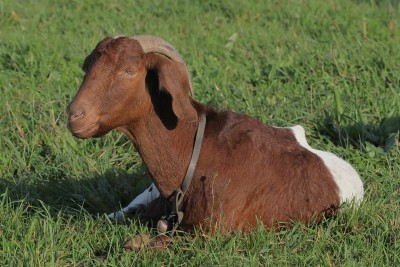
Small Ruminant Producers:
Do you want more parasite resistant animals?
Summer 2021: Free Fecal Egg Count (FEC) analysis to assist with selective breeding for resistance to gastrointestinal worms
AVAILABLE TO:
New or current National Sheep Improvement Program (NSIP) members either in or marketing to the Northeast who want to generate Estimated Breeding Values (EBV) for parasite resistance.
● Producers must be able to obtain and ship fecal samples once or twice (at least 4 weeks later) following NSIP recommendations.
● Animals must NOT have been dewormed within 4 weeks of sampling.
● Fecal egg counts can be conducted for all young stock whose data is being submitted to NSIP.
● For more information on the benefits of membership in NSIP please visit http://nsip.org/ or contact the NSIP Program Director, Rusty Burgett, (info@nsip.org).
OR
Non-NSIP members living in New England, NY, NJ, PA, WV, MD, DE
● Have a history of problems with gastrointestinal nematode worms.
● Are FAMACHA© certified (online training program is available).
● Are willing to share FAMACHA© scores as well as general herd/flock information/history.
● Have the ability to obtain and ship fecal samples once or twice (at least 4 wks later).
● Animals must NOT have been dewormed within 4 weeks of sampling.
● To allow us to provide this service to the maximum number of producers we are focusing the FEC testing on young replacement animals.
FAMACHA© scores can be used to indicate that worm season is active and will provide fecal egg counts high enough for meaningful analysis (minimum herd average >500 eggs/g). Scores of 3 or higher in 10% or more of your flock/herd or an overall upward trend in FAMACHA© scores away from normal 1's and 2's indicate increasing parasite loads. Peak parasite season occurs typically from mid-July through mid-September in most of the U.S. NSIP producers should plan on submitting a first set up samples in July to allow for the 30 to 45 days needed before sending the second set of samples.
We prefer that first samples are taken by Mid-August 2021 but samples will be accepted foranalysis through September 30, 2021.
Please complete the Pre-Registration to receive further information.
Access the Pre-Registration by clicking here for the link.
Please contact Elizabeth Kass or Dr. Katherine Petersson, University of Rhode Island at urisheepandgoat@etal.uri.edu with any questions.
For more information on small ruminant parasite control visit our website at http://web.uri.edu/sheepngoat.
Field Crops
Dairy
Business
Livestock
Grains
Upcoming Events
2024 Aurora Farm Field Day

August 1, 2024
Aurora, NY
The annual Cornell Field Crop Research Field Day will be Thursday, August 1 at the Musgrave Research Farm, Aurora, N.Y. The program features walking and hay wagon tours in the morning and afternoon.
2024 Broiler Field Day at Laughing Earth Farm
August 19, 2024 : 2024 Broiler Field Day at Laughing Earth Farm
Cropseyville, NY
Join us for a free field day to explore broiler production, processing, and finances. Zack and Annie Metzger will be our hosts. They have run this 200 year-old small diversified farm for 8 years. They process their poultry in a 20C kitchen, where they produce value-added products like sausage and dehydrated chicken feet.
2024 Broiler Field Day at Majestic Farm
August 20, 2024 : 2024 Broiler Field Day at Majestic Farm
Mountaindale, NY
Join us for a free field day to explore broiler production, processing, and finances. Brett and Sara Budde will be our hosts. They raise slow-growth organic broilers on their diversified farm in large flocks on woodland pasture. Their birds are processed into whole birds, parts, and chicken sausage.
Announcements
No announcements at this time.