
Soil Temperatures and Insect Captures Remain Low in Southwest New York
Joshua Putman, Field Crops and Forage Specialist
Southwest New York Dairy, Livestock and Field Crops Program
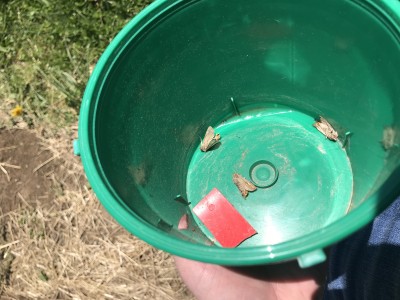
Despite the cooler than usual weather, significant numbers of BCW and CAW have been recorded in our region. So what is a significant number of BCW? Many universities determine a significant flight of BCW as 9 moths over a two-day period. We do not look at our traps daily, only weekly, so we cannot be as accurate. Now that we have some traps that have hit this number, we should monitor the number of degree-days accumulated (base 50°F). It takes roughly 300 degree-days for BCW larvae to be big enough to cut corn plants (4th instar). This is not a scientific process but it gives us a good idea of when we should be out there monitoring for damage. There is no real degree-day thresholds for monitoring Common Armyworm. It will be roughly 100 degree-days to egg hatch. Grass hay fields and winter grains such as wheat and barley are favored egg-laying sites. Corn planted into a green cover crop will also need to be monitored carefully.
Field Crops
Dairy
Business
Livestock
Grains
Upcoming Events
Dairy Feeder School
October 29, 2026 : Dairy Feeder School
Freedom, NY
- One day on-farm training for dairy farm feeders
- Offered in English and Spanish
- Stations with hands-on activities/demos
Tax 102: Tax planning and strategies for Farmers
November 4, 2026 : Tax 102: Tax planning and strategies for Farmers
This webinar follows the "Introduction to Income Taxes" webinar from September, going more into depth on topics including: understanding common tax concepts, tax strategies, long-term approaches to managing taxes, and more!
Labor Roadshow: Practical Workforce Strategies for Agricultural Professionals Across New York
November 30, 2026
December 21, 2026
The Agricultural Workforce Development Council of New York State (AWDC) will celebrate a decade of connecting and educating agricultural professionals when Labor Roadshow X returns this December with five in-person events and two webinars across New York State.
For nearly ten years, the Labor Roadshow has brought agricultural professionals together to learn, connect, and navigate the evolving challenges of agricultural labor. The 2026 event will continue that tradition with timely, expert-led discussions focused on the issues affecting farms and agricultural employers today—including labor law and compliance, employee engagement, retention, and workplace culture.
Announcements
No announcements at this time.