
The Effects of Dry Conditions on Weed Management
By Lynn Sosnoskie; Assistant Professor of Weed Ecology and Management
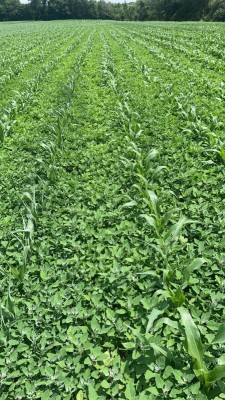
The current weather patterns we have been/are experiencing could significantly impact crop establishment and development; it could also affect weed control success. Although fewer weed seeds may germinate in response to the hot and dry conditions, weeds that do emerge may be more difficult to manage with post-emergence (POST) herbicides. Moisture-stressed weeds are likely to have thicker cuticles (e.g., the waxy coating on the surface of the leaf), which can inhibit the absorption of foliar-applied products. Additionally, plant architecture can be altered if fewer leaves are produced and/or they start to droop; consequently, herbicide capture and retention may be reduced. When weeds are not actively growing, systemic herbicides (such as glyphosate (WSSA 9), growth regulators (WSSA 4), and grass-specific products (WSSA 1)), may not be effectively translocated to their target sites. Although contact herbicides, like paraquat (WSSA 22), could be less affected by hot and dry conditions, herbicide efficacy may still be reduced if spray droplets dry rapidly (either in the air or on plant surfaces) and sufficient coverage is not achieved.
If you are going to make POST herbicide applications, consider the following advice:
Herbicides are most effective when applied at 70 to 85 degrees F, and to vigorously growing plants. Consider making applications to weeds early in the morning, as opposed to the afternoon and evening, when plants have recovered from the previous day's heat may help improve weed control success.
Crop plants may also experience more severe injury when herbicides are applied under high-temperature conditions; always read the label to become familiar with registrant recommendations with respect to crop safety. Additionally, under hot and dry conditions, crop plants may be much slower to recover from injury, so pay attention to weather forecasts and time treatments accordingly. If crop injury is a significant concern from an herbicide application, consider an evening treatment, when temperatures are falling instead of rising. This may be a safer option, especially when using contact products.
Treat weeds when they are small (this is a good practice, regardless of weather conditions) to maximize control. Smaller weeds are likely to be more succulent than older and larger ones and may respond better to herbicide applications.
Use adjuvants wisely. Adjuvants may improve weed control but could also enhance crop injury potential. Always read the label for recommendations regarding adjuvant selection and use under hot and dry conditions.
Warm temperatures and reduced soil moisture can also affect the performance of residual, pre-emergence (PRE) herbicides. Without precipitation or irrigation, many soil-applied herbicides cannot be effectively activated (e.g., being moved into the soil water solution so that they can be taken up by emerging weed seedlings). Some herbicides can be mechanically incorporated, although product distribution may be uneven in dry soils. Additionally, the potential for photo-degradation or volatilization may be increased under hot and dry conditions, resulting in reduced herbicide efficacy and/or unintended off-target movement. Wind erosion of dry soils could also result in surface-applied products moving off target.
Cultivation of small weeds (e.g., white thread stage) under dry conditions can be effective for eliminating emerged vegetation and moving some PRE herbicides into the soil. However, it can be very difficult to evenly mix soil-applied herbicides into dry soils.
Diligent scouting is critical during this time. It is important to understand what weeds are up and what growth stages they are at to best choose a management plan. Pay attention to the evenness of crop development to better understand the potential impacts of herbicide applications on injury development.
Field Crops
Dairy
Business
Livestock
Grains
Upcoming Events
Dairy Feeder School
October 29, 2026 : Dairy Feeder School
Freedom, NY
- One day on-farm training for dairy farm feeders
- Offered in English and Spanish
- Stations with hands-on activities/demos
Tax 102: Tax planning and strategies for Farmers
November 4, 2026 : Tax 102: Tax planning and strategies for Farmers
This webinar follows the "Introduction to Income Taxes" webinar from September, going more into depth on topics including: understanding common tax concepts, tax strategies, long-term approaches to managing taxes, and more!
Labor Roadshow: Practical Workforce Strategies for Agricultural Professionals Across New York
November 30, 2026
December 21, 2026
The Agricultural Workforce Development Council of New York State (AWDC) will celebrate a decade of connecting and educating agricultural professionals when Labor Roadshow X returns this December with five in-person events and two webinars across New York State.
For nearly ten years, the Labor Roadshow has brought agricultural professionals together to learn, connect, and navigate the evolving challenges of agricultural labor. The 2026 event will continue that tradition with timely, expert-led discussions focused on the issues affecting farms and agricultural employers today—including labor law and compliance, employee engagement, retention, and workplace culture.
Announcements
No announcements at this time.