
Framing the Discussions on BMR Corn
By Joe Lawrence; PRO-DAIRY
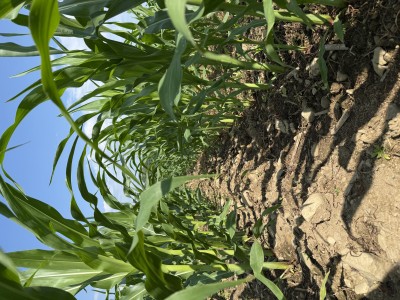
In the spring of 2025, Corteva announced they would discontinue the development of brown midrib (BMR) corn products. Given that the seed brands under the Corteva umbrella constitute a very significant portion of the BMR corn available in the market, this has caused significant discussion among dairy farmers and nutritionists who have found BMR to be a useful tool.
As numerous discussions on the topic have unfolded over the last several months, it has been apparent that sometimes the framing of the questions are not leading to the most productive discussions or decisions for a farm.
BMR is one tool in the toolbox
In my experience for each farmer or nutritionist I know that found BMR to be a useful tool, there was one or more who did not. As with many tools in our toolbox to feed cows, its effectiveness often has as much to do with other factors in a farms feeding system as it does with the unique attributes of BMR itself. It is a great tool for some farms but not the singular key to successfully feeding cows.
It is misleading to talk about replacements for BMR in the diet
BMR is a unique trait with potential benefits to feeding ruminants in that it consistently has higher fiber digestibility than non-BMR corn silage. There are a number of other forages that have unique characteristics that are potentially beneficial to feeding ruminants, but none are a one-for-one replacement for BMR.
As with BMR, they all have their pros and cons. There are other crops with higher digestibility, such as other annual grasses with the BMR trait (sorghum, sundangrass, and millet) and low lignin alfalfa. However, the similarities with BMR corn silage mostly stop after the improved digestibility. These other crops all feed differently, playing different roles in the diet. They could be a useful tool in our feeding toolbox, but none fit in the diet exactly as BMR corn does.
Instead, various forms of short corn are garnering a lot of attention for potential positive feeding attributes and while the work certainly appears promising on the role these corn products could play in successful milk production, they are not a one-for-one replacement for BMR. They are another potential tool in the toolbox for successful milk production.
The digestibility of non-BMR corn is not consistently "closing the gap" with BMR
It is well documented that the fiber digestibility of corn silage is significantly influenced by the weather, and the digestibility of both non-BMR and BMR hybrids will fluctuate by year and location. In general, higher rainfall patterns lead to lower fiber digestibility. Furthermore, as observed in our New York and Vermont Hybrid Evaluation program and other publicly available datasets, the magnitude of the digestibility difference between non-BMR and BMR hybrids is influenced by the weather. One example of this is a trial we had several years ago where the same group of hybrids were planted at two different locations with differences in rainfall patterns.
The comparison of 30-hour neutral detergent fiber digestibility (NDFD) is shown in Table 1. While it is worth noting that in this, and most trials, non-BMR entries substantially outnumber the BMR entries, the trends shown here are consistent with other trials where BMR corn has been included. At both locations the BMR corn had a higher NDF digestibility than the non-BMR; however, the keys are the fact that there is a much larger spread between the BMR and non-BMR at the higher rainfall location (10 points versus 2.5 points) and the non-BMR at the lower rainfall location (66 NDFD) rivals the BMR (67.1 NDFD) at the higher rainfall location.
Table 1: Comparison of fiber digestibility of the same BMR and non-BMR hybrids at two locations
Location rainfall
Non-BMR average
BMR average
Lower
66.0
69.6
Higher
57.1
67.1
The context of location is critical to properly assessing the differences. It would not be appropriate to compare the non-BMR at the lower rainfall location to the BMR at the higher rainfall location but unfortunately these inappropriate comparisons have come up and are clouding the discussion around non-BMR "closing the gap" with BMR.
BMR corn is still available
While it is true that Corteva dominated the market with respect to number of BMR hybrids in North America, the BMR trait has been around for decades and is commercially available. The reality is the limited options available outside of this lineup may not provide the same portfolio of other traits (specifically genetically engineered pest management traits) that has been offered by the Corteva lineup. It is reasonable to expect that where there is a market opportunity, a business will work to meet the need; however, it could take several years for this to happen.
Important talking points for strategizing forage plans on your farm:
- BMR corn is one tool in the toolbox that worked better for some farms than others.
- There are numerous other forage tools in the toolbox that can aid in successful milk production, but none are a one-for-one replacement for BMR corn in the ration.
- BMR corn is not going away entirely; however, at least in the short-term available options with other desired agronomic traits may be limited. This will affect decisions on which acres are appropriate to grow it upon.
Field Crops
Dairy
Business
Livestock

Grains
Upcoming Events
Poultry Processing Workshop, Canandaigua, NY
September 17, 2026 : Poultry Processing Workshop - Canandaigua, NY
Canandaigua, NY
This program is one of four statewide roadshow stops across the state, offering farmers a full poultry processing experience. The class will teach skills that build confidence, reduce costs, and strengthen your farm's independence. This hands-on workshop gives farmers the chance to process a bird from start to finish, learning every step of the workflow used by small farms across the state.
Tax 101: An Introduction to Income Taxes for Farmers
September 17, 2026 : Tax 101: An Introduction to Income Taxes for Farmers
Join NY Farm Net for a FREE mid-day webinar about income tax basics for farmers. Attendees will learn what documents you need, options for recordkeeping systems, how identify common tax forms and schedules, and more!
Large Animal Awareness Training For First Responders
September 19, 2026
Dunkirk, NY
Join the Chautauqua County Technical Rescue Services and NYS Veterinarian, Dr. Kate Card-Allen, for a specialized training on how to safely and effectively respond to large animal incidents. Learn techniques for managing large animals during traffic accidents, rollovers, entrapments and other transportation emergencies.
Announcements
No announcements at this time.