
Expansion of (Asian) Longhorned Tick in New York
Expansion of the Asian longhorned tick within New York
By Joellen Lampman, Tick and School IPM Coordinator, with a local perspective by Amy Barkley, Livestock Specialist, SWNYDLFC.
The Asian longhorned tick, now known as the Longhorned Tick, (LHT) is an invasive tick now reported in 18 counties within New York, with 7 counties having known established populations. It is suspected that migratory birds spread the ticks found in western NY.

Single ticks found in reported counties can lead to an established population in one generation because of how LHT reproduce. In the United States, females are laying viable eggs with no assist from a male. A single female can produce 2,000 more females, which have the potential of producing 2,000 more females… each.
LHT is a major threat to livestock. There are cases of LHT vectoring bovine theileriosis, a cattle disease, in NY with at least one fatality. In addition to disease, there have been reports of cattle deaths from extremely high tick numbers. It is still being determined whether these deaths were caused by severe blood loss due to the sheer number of feeding ticks or toxicosis caused by a reaction to something within LHT saliva. Or a combination of the two.
In order to help track the expansion of this tick, please help Cornell IPM with our surveillance efforts. We are asking those who own livestock, from producers to 4H club members, to report any suspected LHT on their farms at go.nysipm.org/report-lht. The form includes a few questions and allows you to upload a photograph of the tick. Cornell Integrated Pest Management staff will follow up with you within a few days.
If you have any questions, contact Joellen Lampman, Tick and School IPM Coordinator, at jkz6@cornell.edu.
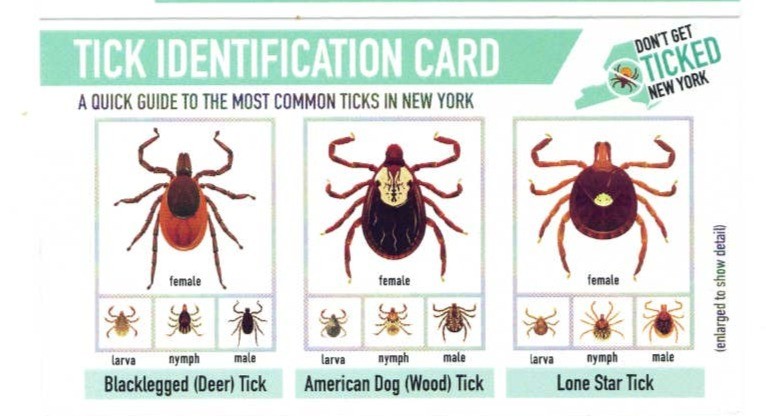 These three ticks have established populations in NYS, including WNY. They are the Blacklegged (Deer) Tick, the American Dog (Wood) Tick, and the Lone Star Tick. Click to enlarge
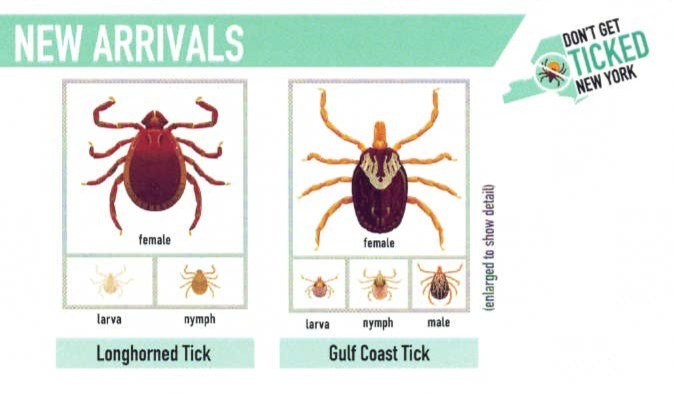 The Longhorned Tick and Gulf Coast Tick are two invasive ticks that we recommend reporting to NYS IPM program so that we can keep track of the population spread. Click to enlarge.
The Local Perspective:
For SWNY Farmers, this the LHT is not a significant concern… yet. Research shows that ticks are not killed by our winters but merely go into a dormant state and will emerge when conditions permit. More severe winters slow the migration and population growth of of ticks, though.
The reported findings of the Longhorned tick indicate areas where the public has correctly identified and reported the tick. There are likely more individual cases out there. Over time, the tick can establish populations, considering they don't need a male to reproduce. So, keep a look out! The graphics below show the three common ticks in NY as well as the two invasive ticks that we're keeping an eye on (the Longhorned Tick and the Gulf Coast Tick). If you see one of the two invasive ticks, please collect them in a container marked with the date you found them and make a report at go.nysipm.org/report-lht
There have been increased reports of tick bites this fall on both animals and people. I was just at the Cornell Sheep and Goat Symposium over Halloween weekend and heard from 5 individuals who either had or knew someone who had alpha-gal syndrome resulting from a tick bite. This is a potentially life-threatening condition where the person in question cannot eat, or in some cases inhale particles of, mammalian meat, milk, and by-products (like collagen and gelatin). Removing ticks as soon as they're identified can limit the salivary transmission of the molecule causing the condition. The Lonestar tick is most often associated with transmission of the disease but Blacklegged (deer) ticks show evidence of transmission as well.
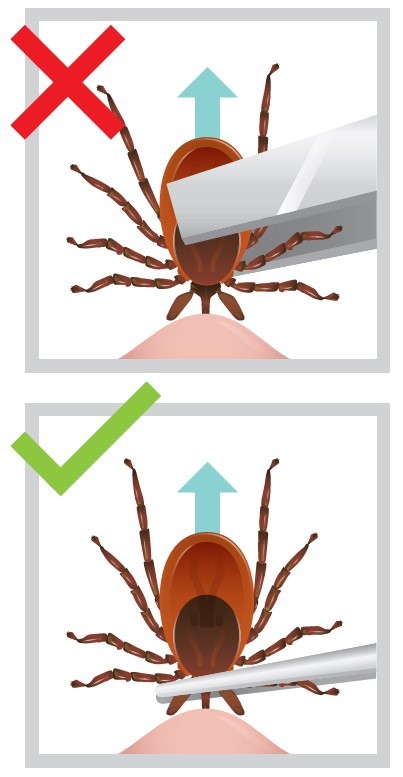
The infographic below shows how to properly remove a tick. To reduce the chance of keeping the head embedded, remove with fine tweezers as close to the skin as possible. Squeezing the tick's body can cause a backflow of tick gut contents into the host.

Field Crops
Dairy

Business
Livestock

Grains
Upcoming Events
Livestock Production Field Day
August 29, 2026 : Livestock Production Field Day
Chaffee, NY and East Aurora, NY,
Join us on visits to Horizon Ridge Farm in East Aurora and Troll Bridge Farm in Chaffee for an introduction to small beef and small diversified livestock enterprises. Through walking farm tours, attendees will learn about management, meat processing, setting prices, and finding local markets. Dinner will be provided. Register by contacting Amy Barkley at amb544@cornell.edu or 716-640-0844.
Poultry Processing Workshop, Naples, NY
September 17, 2026 : Poultry Processing Workshop - Naples, NY
Naples, NY
This program is one of four statewide roadshow stops across the state, offering farmers a full poultry processing experience. The class will teach skills that build confidence, reduce costs, and strengthen your farm's independence. This hands-on workshop gives farmers the chance to process a bird from start to finish, learning every step of the workflow used by small farms across the state.
Large Animal Awareness Training For First Responders
September 19, 2026
Dunkirk, NY
Join the Chautauqua County Technical Rescue Services and NYS Veterinarian, Dr. Kate Card-Allen, for a specialized training on how to safely and effectively respond to large animal incidents. Learn techniques for managing large animals during traffic accidents, rollovers, entrapments and other transportation emergencies.
Announcements
No announcements at this time.