
Udder Trouble in the Fall
Katie Callero, Dairy Management Specialist
Southwest New York Dairy, Livestock and Field Crops Program
It's only a matter of time before the leaves start to change and we find ourselves in the middle of fall. As the weather begins to change, you may notice warmer days and cooler nights. These temperature fluctuations tend to create damper bedding for cows. When cows only have access to moist bedding, mastitis cases on your farm may begin to rise. Mastitis is not only an animal welfare concern, but it can also hurt your milk check.
Mastitis is caused by bacteria entering the teat end of a cow. These bacteria multiply and cause an infection in the udder. Wet dirty bedding isn't the only cause of mastitis. Anything that introduces bacteria to the teats, such as using dirty towels during milking, can cause infection. Mastitis can be identified by any flakes, chunks, or discoloration in the milk. This is best identified when you are stripping a cow's teat before milking. Quarters that have mastitis can often present as hard, hot, red, or swollen. If you find a cow in your herd with mastitis, talk to your veterinarian about treatment and write down their advice to use as a future protocol. It is also of paramount importance to record this mastitis case in your farm records or herd management system. Keeping records helps you make informed culling decisions for cows with recurring mastitis or other health issues.
As always, prevention is the best strategy. To help prevent mastitis, keep bedding clean and dry, fix holes or leaks that let rain into the bedding area, milk only clean teats, and milk sick cows last or with a separate unit to avoid spreading bacteria. As we head into the challenges that fall weather brings, it is important to keep a close eye on bedding to add more when needed. Take extra time each milking to inspect quarters and stripped milk. Preventing mastitis and catching it early can help save you time and money. A little extra attention this fall can go a long way toward keeping your cows comfortable and your milk check steady.
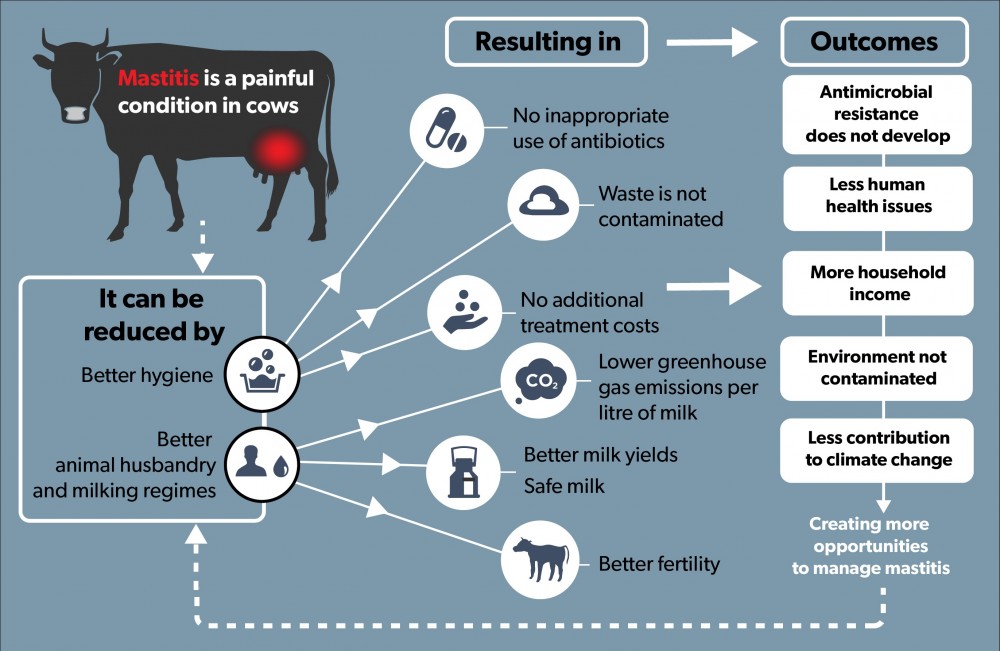 Image Source: Livestock Pathways to 2030: One Health | Why Livestock Matter
Field Crops
Dairy
Business
Livestock
Grains
Upcoming Events
Livestock Production Field Day
August 29, 2026 : Livestock Production Field Day
Chaffee, NY and East Aurora, NY,
Join us on visits to Horizon Ridge Farm in East Aurora and Troll Bridge Farm in Chaffee for an introduction to small beef and small diversified livestock enterprises. Through walking farm tours, attendees will learn about management, meat processing, setting prices, and finding local markets. Dinner will be provided. Register by contacting Amy Barkley at amb544@cornell.edu or 716-640-0844.
Poultry Processing Workshop, Naples, NY
September 17, 2026 : Poultry Processing Workshop - Naples, NY
Naples, NY
This program is one of four statewide roadshow stops across the state, offering farmers a full poultry processing experience. The class will teach skills that build confidence, reduce costs, and strengthen your farm's independence. This hands-on workshop gives farmers the chance to process a bird from start to finish, learning every step of the workflow used by small farms across the state.
Large Animal Awareness Training For First Responders
September 19, 2026
Dunkirk, NY
Join the Chautauqua County Technical Rescue Services and NYS Veterinarian, Dr. Kate Card-Allen, for a specialized training on how to safely and effectively respond to large animal incidents. Learn techniques for managing large animals during traffic accidents, rollovers, entrapments and other transportation emergencies.
Announcements
No announcements at this time.