
Buckle Up: Volatile Nitrogen Pricing
Katelyn Miller, Field Crops and Forage Specialist
Southwest New York Dairy, Livestock and Field Crops Program
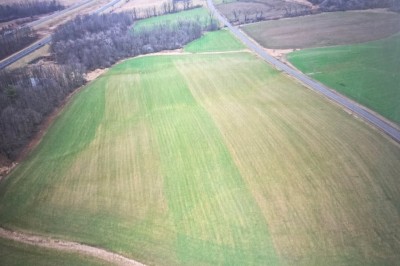
You don't need me to tell you that the price of nitrogen fertilizer, most notably urea, has skyrocketed in the last month (along with other inputs like fuel). At the beginning of March, we saw urea increases of $150/ton above February pricing, which feels minor compared to some quotes farmers have shared with me as of late. It's unclear at this time what prices will continue to do, especially as we enter a period of heavy N usage nationwide, but if current prices are any indicator, you should stay buckled up for continued volatile N pricing.
Recently, I have been hearing questions about why the price increase happened so rapidly, considering that (in theory) most of the N should have already been in transit, if not already located in ports before geopolitical developments. I feel like this is a great time to remind you that I have absolutely no control over this but will attempt to provide some context for why this might be happening. According to the American Farm Bureau Federation, the U.S. relies on domestic production and imports to meet fertilizer demand, with an estimated 97% of potassium, 13% of phosphate, and 18% of our N being imported. The Strait of Hormuz is a major shipping channel, accounting for transportation of approximately 25% of all globally traded N. Additionally, because of natural gas reservoirs, the Persian Gulf is a hub for fertilizer production and exports, as the countries in this region account for nearly 50% of global urea exports. Though we may not be importing large quantities of fertilizer from this region, domestic markets will still respond to price movements because of both production and transportation impacts.
Knowing that we will likely continue to experience volatile N pricing, coupled with less than stellar commodity prices, it's a critical time to evaluate your nutrient management strategy. I've seen some articles out of the Midwest discussing the potential of shifting crop acreage more to soybeans, as they are less subject to such volatile shifts in fertilizer pricing. Unfortunately, this doesn't work great for a majority of SWNY as much of our acreage is forage for livestock. It's not like you can just go without purchasing any fertilizer, so what can you do to ensure that you maintain crop yields while also protecting your bottom line?
The key theme of this article is efficiency, as managing increasing fertilizer costs cannot effectively be managed by just generally reducing inputs. The goal should be applying nutrients in such a way that generates the greatest economic return. Every year, I get asked how much N should be applied to meet crop needs, and while blanket recommendations technically exist, nutrient needs depend on many factors: crop, variety, historical yield, crop rotation, soil test results, weather, soil texture, and additional inputs like manure. Remember that every field, and their nutrient requirements are different.
The foundation of nutrient management is soil testing, and I wouldn't be a proper Extension agent if I didn't continue to stress its importance. Reports provide us with an understanding of the availability of macronutrients, micronutrients and soil pH. An additional soil sample includes the pre-sidedress nitrate test, which can be used to determine if additional N is needed by estimating the soil's nitrate supplying potential, and if it's enough to meet crop needs. Tissue testing serves as an additional tool to understand in-season trends, diagnose deficiencies, or measure end-of-season uptake.
Pairing crop needs with results will allow you to fine tune nutrient applications, reducing the need for 'insurance' applications. These applications are not efficient, nor cost effective, and at times, additional nutrients will not result in a yield response, also known as a yield response curve. Consider the timing of your cropping rotation, implemented practices like cover crops that improve soil health, and soil available N through channels such as organic matter and the nutrient credits you will receive for these.
One of the most recognized management strategies of nutrients, especially as it relates to fertilizer, is the 4R Nutrient Stewardship principle, designed to help improve nutrient use efficiency while reducing losses. The 4R's stand for applying fertilizer (or nutrients in general) at the right rate, right time, right place, while using the right source. Each of these pieces allow for the best nutrient utilization.
I cannot finish this article without touching on an important nutrient source - manure. There is recognition that managing large volumes at time can be a hinderance, having to consider application timing and nutrient regulations, field access, labor, equipment, fuel costs and much more. Regardless, it's an incredibly useful waste product. With such volatile pricing swings, manure management will likely play a large role in meeting nutrient requirements. However, there is the question around what's more cost effective: hauling manure versus purchasing fertilizer? The Cornell Nutrient Management Spear Program developed a tool that can help us determine that, and more specifically:
- What is the fertilizer equivalent value of a manure application?
- What is the break-even hauling distance for hauling my manure?
- What are the operating and ownership costs for my manure machinery?
- What is the value (in terms of fertilizer replacement) and cost of exporting manure?
- How much time (clock hours as well as machinery and labor) will it take to spread manure?
For those looking to manure to help bridge the gap amidst volatile fertilizer swings, this Excel tool can help bridge the gap and give you a thorough understanding of the tradeoffs between manure hauling and fertilizer purchasing. If you are interested in the tool, you can visit the NMSP website under the tools tab, or email Katelyn. Fertilizer prices, especially N, are quite volatile, with no clear outlook. Efficiency as it relates to nutrients will be a major factor in maintaining your crop yields while also protecting your bottom line. Understanding crop needs, your costs, and employing various nutrient management strategies can help your farm navigate volatile fertilizer pricing. Don't forget that you have access to friendly service providers who are here to help.
Resources:
• American Farm Bureau Federation. (2026). Middle East Tensions Raise Spring Planting Concerns. https://www.fb.org/
• Cornell Nutrient Management Spear Program. (2010). Manure Cost, Value and Time Management Calculator. http://nmsp.cals.cornell.edu/p... ations/factsheets/factsheet53.pdf
Photo credit: Kelly Torrey
Field Crops
Dairy
Business

Livestock

Grains
Upcoming Events
Livestock Production Field Day
August 29, 2026 : Livestock Production Field Day
Chaffee, NY and East Aurora, NY,
Join us on visits to Horizon Ridge Farm in East Aurora and Troll Bridge Farm in Chaffee for an introduction to small beef and small diversified livestock enterprises. Through walking farm tours, attendees will learn about management, meat processing, setting prices, and finding local markets. Dinner will be provided. Register by contacting Amy Barkley at amb544@cornell.edu or 716-640-0844.
Large Animal Awareness Training For First Responders
September 19, 2026
Dunkirk, NY
Join the Chautauqua County Technical Rescue Services and NYS Veterinarian, Dr. Kate Card-Allen, for a specialized training on how to safely and effectively respond to large animal incidents. Learn techniques for managing large animals during traffic accidents, rollovers, entrapments and other transportation emergencies.
Cows, Crops & Critters - Southwest New York Dairy, Livestock & Field Crops Newsletter Sponsorship
December 18, 2026
Our two forms of publications feature research-based and timely information from our four specialists, listed to the right, along with local event notifications and Cornell University outreach. This information is provided to participants who range from dairy, livestock, and field crops producers to agricultural suppliers and consultants.
Weekly Email Update: Shared with 625+ households who have signed up with our program.
Monthly Paper Mailer: To reach our stakeholders and farmers who lack internet access, we send out a monthly mailer where your company's logo and contact information would be featured with a mailing list of 330+ households.
If you sponsor our weekly and monthly publications you reach approximately 955 households.
Visit our website to view our newsletters!
Announcements
No announcements at this time.