
The Effects of Dry Conditions on Weed Management
By Lynn Sosnoskie; Assistant Professor of Weed Ecology and Management
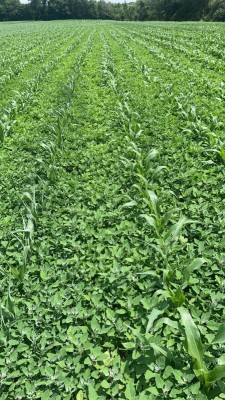
The current weather patterns we have been/are experiencing could significantly impact crop establishment and development; it could also affect weed control success. Although fewer weed seeds may germinate in response to the hot and dry conditions, weeds that do emerge may be more difficult to manage with post-emergence (POST) herbicides. Moisture-stressed weeds are likely to have thicker cuticles (e.g., the waxy coating on the surface of the leaf), which can inhibit the absorption of foliar-applied products. Additionally, plant architecture can be altered if fewer leaves are produced and/or they start to droop; consequently, herbicide capture and retention may be reduced. When weeds are not actively growing, systemic herbicides (such as glyphosate (WSSA 9), growth regulators (WSSA 4), and grass-specific products (WSSA 1)), may not be effectively translocated to their target sites. Although contact herbicides, like paraquat (WSSA 22), could be less affected by hot and dry conditions, herbicide efficacy may still be reduced if spray droplets dry rapidly (either in the air or on plant surfaces) and sufficient coverage is not achieved.
If you are going to make POST herbicide applications, consider the following advice:
Herbicides are most effective when applied at 70 to 85 degrees F, and to vigorously growing plants. Consider making applications to weeds early in the morning, as opposed to the afternoon and evening, when plants have recovered from the previous day's heat may help improve weed control success.
Crop plants may also experience more severe injury when herbicides are applied under high-temperature conditions; always read the label to become familiar with registrant recommendations with respect to crop safety. Additionally, under hot and dry conditions, crop plants may be much slower to recover from injury, so pay attention to weather forecasts and time treatments accordingly. If crop injury is a significant concern from an herbicide application, consider an evening treatment, when temperatures are falling instead of rising. This may be a safer option, especially when using contact products.
Treat weeds when they are small (this is a good practice, regardless of weather conditions) to maximize control. Smaller weeds are likely to be more succulent than older and larger ones and may respond better to herbicide applications.
Use adjuvants wisely. Adjuvants may improve weed control but could also enhance crop injury potential. Always read the label for recommendations regarding adjuvant selection and use under hot and dry conditions.
Warm temperatures and reduced soil moisture can also affect the performance of residual, pre-emergence (PRE) herbicides. Without precipitation or irrigation, many soil-applied herbicides cannot be effectively activated (e.g., being moved into the soil water solution so that they can be taken up by emerging weed seedlings). Some herbicides can be mechanically incorporated, although product distribution may be uneven in dry soils. Additionally, the potential for photo-degradation or volatilization may be increased under hot and dry conditions, resulting in reduced herbicide efficacy and/or unintended off-target movement. Wind erosion of dry soils could also result in surface-applied products moving off target.
Cultivation of small weeds (e.g., white thread stage) under dry conditions can be effective for eliminating emerged vegetation and moving some PRE herbicides into the soil. However, it can be very difficult to evenly mix soil-applied herbicides into dry soils.
Diligent scouting is critical during this time. It is important to understand what weeds are up and what growth stages they are at to best choose a management plan. Pay attention to the evenness of crop development to better understand the potential impacts of herbicide applications on injury development.
Field Crops
Dairy
Business
Livestock
Grains
Upcoming Events
Livestock Production Field Day
August 29, 2026 : Livestock Production Field Day
Chaffee, NY and East Aurora, NY,
Join us on visits to Horizon Ridge Farm in East Aurora and Troll Bridge Farm in Chaffee for an introduction to small beef and small diversified livestock enterprises. Through walking farm tours, attendees will learn about management, meat processing, setting prices, and finding local markets. Dinner will be provided. Register by contacting Amy Barkley at amb544@cornell.edu or 716-640-0844.
Large Animal Awareness Training For First Responders
September 19, 2026
Dunkirk, NY
Join the Chautauqua County Technical Rescue Services and NYS Veterinarian, Dr. Kate Card-Allen, for a specialized training on how to safely and effectively respond to large animal incidents. Learn techniques for managing large animals during traffic accidents, rollovers, entrapments and other transportation emergencies.
Cows, Crops & Critters - Southwest New York Dairy, Livestock & Field Crops Newsletter Sponsorship
December 18, 2026
Our two forms of publications feature research-based and timely information from our four specialists, listed to the right, along with local event notifications and Cornell University outreach. This information is provided to participants who range from dairy, livestock, and field crops producers to agricultural suppliers and consultants.
Weekly Email Update: Shared with 625+ households who have signed up with our program.
Monthly Paper Mailer: To reach our stakeholders and farmers who lack internet access, we send out a monthly mailer where your company's logo and contact information would be featured with a mailing list of 330+ households.
If you sponsor our weekly and monthly publications you reach approximately 955 households.
Visit our website to view our newsletters!
Announcements
No announcements at this time.