
Benefits of Estrus Synchronization and Artificial Insemination, by Mark Johnson
Amy Barkley, Team Leader & Livestock Specialist
Southwest New York Dairy, Livestock and Field Crops Program
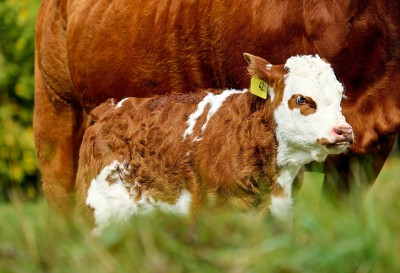
Benefits of Estrus Synchronization and Artificial Insemination in Beef Cattle
Mark Z. Johnson, Oklahoma State University Extension Beef Cattle Breeding Specialist
There are several benefits of estrus synchronization of beef cows. Regardless of when your calving season occurs, manipulating the reproductive process of your cow herd can result in shorter breeding and calving seasons. Accordingly, more calves born earlier in the calving season result in an older, heavier, more uniform calf crop when you wean. Shortened calving seasons permit improvements in herd health and management such as timing of vaccinations and practices that add to calf value with less labor requirements (or at the very least concentrating labor efforts into a shorter time frame). Cows that are closer to the same stage of gestation can also be fed and grouped accordingly which facilitates a higher level of management.
Estrus synchronization can be used for natural mating or breeding by artificial insemination (AI). Synchronization protocols permit us to concentrate the labor needed for heat detection to a few days, and in some cases eliminate the need for heat detection when cows can be bred on a timed basis.
Use of AI permits us to get more cows bred to genetically superior sires for traits of economic importance to our operation's production and marketing goals. Synchronization at the onset of breeding season, results in more cows having heats in the first 18 - 25 days of breeding season. Female's return heats will remain synchronized to a degree, which gives a second chance to AI each female in the early part of breeding season. Without any synchronization, herd managers are faced with a 21 days of continual estrus detection and typically only one opportunity for AI in most females.
Bottomline: estrus synchronization can be an important management tool to get cows settled as early in the breeding season as possible and get cows bred to bulls with highest possible genetic value. A defined breeding season is important to permit meaningful record keeping, timely management and profit potential. Maintaining a 60 to 75 day breeding and calving season can be one of the most important management tools for cow calf producers.
To view Dr. Johnson and Parker Henley's discussion on Replacement Heifers & Breeding Schedules on Sunup TV Cow-Calf Corner from April 24, 2021:
http://sunup.okstate.edu/category/ccc/2021/042421-ccc
To view a recent Rancher's Thursday Lunchtime Series presentation on Synchronization and AI Tools by Dr. Jordan Thomas from University of Missouri https://www.youtube.com/watch?v=PVesshs5__8

Field Crops
Dairy

Business
Livestock

Grains
Upcoming Events
Virtual Egg Count Training for Sheep and Goats
April 23, 2026 : Virtual Fecal Egg Count Training for Sheep and Goats
Amy Barkley and Rachel Moody, Livestock Specialists with Cornell Cooperative Extension, will take attendees through the why, how, and interpretation of fecal egg count testing for sheep and goats using the McMaster method.
Women in Ag Legislative Breakfast
April 24, 2026 : Women in Ag Legislative Breakfast
Avon, NY
Come on out for an in-person gathering celebrating the incredible women shaping agriculture! This event features NYS Assemblywoman Andrea Bailey, NYS Senator Pam Helming, the Finger Lakes Small Business Development Center, Genesee Valley Conservancy, Jenn Vorhees from Sap Tap Farms.
So, You Want to Start a Farm Stand?
May 12, 2026
Announcements
No announcements at this time.