
Can Mutton Make Money?
Amy Barkley, Team Leader & Livestock Specialist
Southwest New York Dairy, Livestock and Field Crops Program
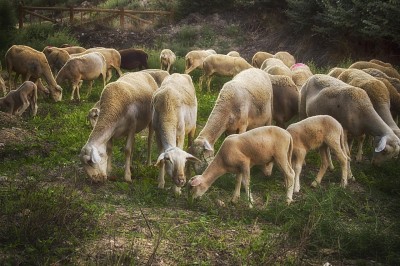
Can Mutton Make Money?
Mutton is a historically low-value animal. When not considering major holidays, prices tend to be around $0.75 - $1.00 per pound live weight. This is a far cry from the $2.00 - $3.00/lb that many producers get for lamb. Mutton is a natural by-product of a sheep farm, and this article makes the argument that there is potential for it to become a valuable co-product.
While mutton may be taboo in the US, residents of England and other countries consume mutton regularly. In England, mutton refers to animals that are over 2 years of age. In the United States, sheep that are over 14 months of age are considered mutton. As sheep age, they become more flavorful, which is highly desirable in many cultures and countries, though this meat is too strongly flavored for many typical American palates. That said, consumers' tastes for more uniquely flavored and robust tasting meats is growing in some markets. It may be time for mutton to make a comeback!
According to research, animals younger than a year of age have the most consistent, mild flavor, regardless of breed. As those animals age, there is a diversification in the intensity of flavors caused by both by age and breed. This comes from fatty acid accumulation, which creates the mutton-y and pastoral (grassy) flavors, which many consumers are not used to. While animals over 2 years of age accumulate the muttony flavor, lush pastures made of a high proportion of legumes contribute to the higher concentrations of grassy notes than pastures with high grass populations.
One farmer, Cody Hiemke of Mapleton Mynd Shropshires, decided to test some theories and see if he could make a "bad" mutton. To do this, he finished out a 6 year-old ewe on alfalfa pasture until she was over finished. He then left the extra fat on the cuts and cooked the meat at a high heat to coax conversions of some off-flavors. The result? Surprisingly delicious mutton. The moral of the story is that mutton can surprise you, and your results may not read the textbook. So, it may make sense for you to give it a try!
To prepare ewes on the farm for processing, it's important to add condition back onto them, especially if they've just weaned their lambs and are on the lean side. Fat is flavor, after all! Farms that regularly send older sheep for processing recommend moving ewes onto a high energy ration following weaning to get them to a good finish, which is having about 0.25 inches of back fat. In addition to unfinished animals lacking flavor and texture, smaller animals will yield less saleable meat than larger animals, as will fatty animals compared to properly finished animals.
Once the ewe is ready to send to slaughter, there are some things to keep in mind:
- Getting all of your cuts as bone-in gives you about a 55% yield from the hot carcass weight. Bone-out will result in a lower yield.
- Does it make sense to have the processor turn your mutton into value-added products like sausages? Typically, there are additional processing costs for adding seasonings and linking. That said, mutton is a lower cost raw material, so if ground lamb sells well for you and your customers enjoy lamb sausages, it may make sense to make sausages from mutton and leave the ground lamb for sale on its own. Keep in mind that seasoning rates may be different for mutton vs pork, so either be open to experimentation or work with a processor who knows and understands working with lamb or mutton.
- If you have access to a 20C kitchen, charcuterie items may be something to consider. The strong flavor of mutton can pair well with typical lamb seasonings and the flavors created during the curing process.
When your animals have been processed, it's time to price them in a way that will make this whole venture worthwhile.
- When your animals have been processed, it's time to price them in a way that will make this whole venture worthwhile. The price for processing any animal must be placed against the potential income from that animal to see if it's profitable. Considering the live weight value plus processing will give you a good benchmark in understanding what you need to charge per pound to earn a profit. Smaller, less fleshy animals may not be worth processing and are better candidates to sell live
- Selling mutton at a discount vs lamb for identical cuts can be a way to encourage customers to try the mutton and for you to sell it. However, keep in mind that mutton cuts are larger than lamb cuts. If packaged the same way, mutton will appear more expensive to the consumer because there's more weight in each package. To combat this, have larger roasts back as stew meat or ground and pack them into smaller packages.
- Lowering the price of mutton too much may make it appear that mutton is of inferior quality. Be conscientious of this if pricing mutton lower.
- Value-added products like sausages and cured meats may have similar flavors between lamb and mutton, so their sale value may be equivalent.
Information for this article was taken from two presentations. The first is titled, "Turning Mutton into Money: Innovative Uses for Mutton" by Cody Hiemke of Mapleton Mynd Shropshires. The second presentation on marketing mutton was given by Cassie Wasser of Willow Pond Sheep Dairy. Both are from a larger webinar presented by the Cornell Livestock PWT on mutton and silvopasture. That original recording can be found here: https://www.youtube.com/watch?v=2Yo7bGC1rrQ
For additional reading, the book, "Much Ado About Mutton" by Bob Kennard, is an insightful review of the history of mutton, it's social and cultural impacts, farming practices, and mutton recipes.
Field Crops
Dairy
Business
Livestock
Grains
Upcoming Events
Livestock Production Field Day
August 29, 2026 : Livestock Production Field Day
Chaffee, NY and East Aurora, NY,
Join us on visits to Horizon Ridge Farm in East Aurora and Troll Bridge Farm in Chaffee for an introduction to small beef and small diversified livestock enterprises. Through walking farm tours, attendees will learn about management, meat processing, setting prices, and finding local markets. Dinner will be provided. Register by contacting Amy Barkley at amb544@cornell.edu or 716-640-0844.
Poultry Processing Workshop, Canandaigua, NY
September 17, 2026 : Poultry Processing Workshop - Canandaigua, NY
Canandaigua, NY
This program is one of four statewide roadshow stops across the state, offering farmers a full poultry processing experience. The class will teach skills that build confidence, reduce costs, and strengthen your farm's independence. This hands-on workshop gives farmers the chance to process a bird from start to finish, learning every step of the workflow used by small farms across the state.
Tax 101: An Introduction to Income Taxes for Farmers
September 17, 2026 : Tax 101: An Introduction to Income Taxes for Farmers
Join NY Farm Net for a FREE mid-day webinar about income tax basics for farmers. Attendees will learn what documents you need, options for recordkeeping systems, how identify common tax forms and schedules, and more!
Announcements
No announcements at this time.