
Southwest New York Beef Update: What We're Seeing Right Now
Amy Barkley, Team Leader & Livestock Specialist
Southwest New York Dairy, Livestock and Field Crops Program
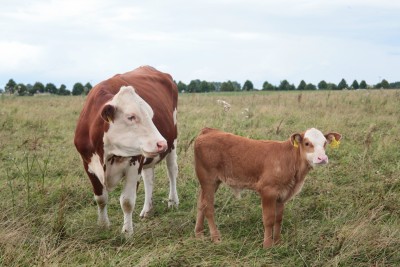
With all that's going on in the world right now, some beef producers are asking, "what happens next". While it's likely that none of this will come as a surprise, it's worth stepping back and looking at the bigger picture, the regional lens, and what this means for moving forward.
The Beef Council reports that demand for beef is still strong, even with higher prices at the supermarket. They're finding that beef is relatively inelastic, meaning that consumers still want beef, even when it's at some of its highest retail prices to date. This is because we're dealing with a classic case of supply and demand. Nationally, we're dealing with the smallest cattle herd we've seen in decades; the USDA reports that the U.S. calf crop is at a 75-year low, largely due to the ripple effects of drought in the Midwest over the past several years.
Here at home in Southwest New York, demand for beef is holding steady too. More and more folks are looking to buy directly from farms they know and trust. Selling quarters, halves, and whole animals continues to be one of the most affordable options for consumers—and a solid marketing route for many of you. Selling individual cuts provides a way to meet even more consumers while allowing the flexibility to sell beef at farmers markets and local farm stores, extending your reach.
How are My Costs Being Affected by World Events?
Input costs are expected to rise, further putting the crunch on our local farmers. Diesel and fertilizer cost increases will impact farmers now and will likely impact grain prices later this year if input prices stay high. Additionally, calf prices are proving a unique challenge to beef producers, with both dairy bull and beef-type calves hitting record highs since they started climbing in 2022. Because of this, operations that purchase in calves to raise and finish vs producing them on the farm are seeing a more significant impact to their bottom line, and many may consider raising meat prices as a result. These unprecedented calf prices are also in large part a reflection of the national beef herd shortage.
That said, there are certainly positives of high cattle prices. Not only are live animal prices up for those looking up for beef animals, but dairy farmers are also realizing increased value in their cull dairy cows, which are selling at record highs, too. Cull dairy does move into the beef market, after all (: This adds additional value to the dairy sector in addition to increased prices for bull calves and the newly common co-product of the dairy sector: beef on dairy cross calves.
Processing accessibility continues to be a challenge, especially for those who are looking to sell individual cuts or sell beef over state lines. Processing facilities, whether custom or USDA, have long wait lists, and some farms must travel over an hour to bring their cattle to market. In addition, we are seeing a trend where processing facilities are reducing the number of head they're processing, adding to the problem. That said, there are facilities that are transitioning over to USDA and/or being brought online as either custom exempt or USDA certified to help improve the bottlenecks around processing. In September 2025, a new NYS Department of Labor Butcher Trade was launched to increase awareness to the potential job opportunities and training of qualified butchers. While it's too early to understand the impact of this program, it is gaining traction across the state.
Staying Ahead
With everything going on, now's a good time to really know your numbers. Take a hard look at your cost of production and make sure your pricing is keeping up with input costs. If you need to raise prices, think about where it makes the most sense. Maybe that looks like raising the price on steaks while keeping ground beef steady. Perhaps it looks like making value added products like jerky or hot dogs that you can charge a premium for. Other times, raising prices across the board on your offerings may be the solution. Cornell's Meat Pricing Calculator can help you with some of these decisions, and our team can help you with using the tool.
Also think about where small management changes could make a difference. Could better quality stored forage or pasture help you cut back on grain during backgrounding and finishing? Can you tweak your calf processing program to reduce stress and wean at a higher weight? Can you improve your vaccination program to reduce the incidence of common diseases to make sure every animal performs at their best? Those decisions are going to look a little different on every farm. Sometimes, it's hard to see where we can make changes, and a second set of eyes can be helpful. Whether it's your local extension agent or another producer, another person can help you spot opportunities to improve efficiency.
The Big Takeaway
Like most things in agriculture, this incidence of increased production costs is part of the cyclical nature of the beast. We won't stay in this exact spot forever. In the meantime, focusing on efficiency, knowing your markets, and keeping your product consistent will go a long way toward keeping customers coming back and keeping dollars in your pocket.
Field Crops
Dairy
Business
Livestock
Grains
Upcoming Events
Poultry Processing Workshop, Canandaigua, NY
September 17, 2026 : Poultry Processing Workshop - Canandaigua, NY
Canandaigua, NY
This program is one of four statewide roadshow stops across the state, offering farmers a full poultry processing experience. The class will teach skills that build confidence, reduce costs, and strengthen your farm's independence. This hands-on workshop gives farmers the chance to process a bird from start to finish, learning every step of the workflow used by small farms across the state.
Tax 101: An Introduction to Income Taxes for Farmers
September 17, 2026 : Tax 101: An Introduction to Income Taxes for Farmers
Join NY Farm Net for a FREE mid-day webinar about income tax basics for farmers. Attendees will learn what documents you need, options for recordkeeping systems, how identify common tax forms and schedules, and more!
Large Animal Awareness Training For First Responders
September 19, 2026
Dunkirk, NY
Join the Chautauqua County Technical Rescue Services and NYS Veterinarian, Dr. Kate Card-Allen, for a specialized training on how to safely and effectively respond to large animal incidents. Learn techniques for managing large animals during traffic accidents, rollovers, entrapments and other transportation emergencies.
Announcements
No announcements at this time.