
Pre-Weaned Dairy Calf Calorie Requirements and Nutritional Scours
Pre-Weaned Dairy Calf Calorie Requirements and Nutritional Scours
By: Margaret Quaassdorff & Casey Havekes, Cornell Cooperative Extension Regional Dairy Management Specialists
Introduction:
It is widely accepted as an industry standard that calves should double their birth weight by 60 days of age. To accomplish this target, or even exceed it, calves must receive a sufficient supply of required nutrients. Often this results in calves being fed high amounts of milk and/or milk replacer. An important consideration when feeding high planes of nutrition is that the more liquid that goes into the calf, the more liquid there will be coming out. Loose manure from calves on a high milk diet can easily be confused with nutritional scours. The first objective of this article is to help calf raisers understand and calculate nutrient requirements. Secondly, the article strives to help calf raisers understand the difference between nutritional scours and normal loose manure, and if action is necessary to improve the health and wellbeing of these calves.
Energy Requirements of Calves:
A calf's nutrient requirements can be broken down into the following categories: energy, protein, vitamins, and minerals. Like all growing animals, the nutrients provided to the calf will first go towards maintenance and then any remaining nutrients will go towards growth. So, you may be wondering how we should feed these calves to ensure there are sufficient nutrients available to meet our growth targets. That is an excellent question, and we will attempt to walk you through the steps below to calculate energy requirements, specifically. Please note, that your local Extension Support or trusted advisors are also available to help you. Maintenance requirements for calves can be calculated with the following equation:
MEmaintenance Mcals = 0.1 x BW(kg)0.75
If we take a 41 kg (~90 lb) calf, for example, her maintenance requirement is going to be 1.61 Mcals metabolizable energy (ME)/day. An important note is that this equation does not consider temperature or breed which are both very important when calculating energy requirements. During cold weather, calves require additional energy to meet their maintenance and growth requirements. Specifically, for every °C the temperature drops below the calf's thermoneutral zone (15°C or 60°F), the calf's energy requirement is going to increase by ~0.03 Mcals ME. This may not seem like a big increase, but if you think about a very cold winter day where the temperature is -15°C (5°F), that calf's energy requirement for maintenance alone is going to be increased by 0.9 Mcals ME (i.e. 0.03 * 30°C difference between thermoneutral temperature and outside temperature).
So now that we understand maintenance requirements, we need to calculate how many additional nutrients are required to achieve growth targets. The energy requirement for growth can be calculated with the following equation:
MEgrowth Mcals = [0.84 * BW(kg)0.355 * (ADG (kg/d)1.2)]
If we take that same 41 kg calf and we would like for her to gain 0.8 kg/day, then her growth requirement is going to be 2.4 Mcals ME. Now, if we combine her growth and maintenance requirements (assuming it is a nice spring day with a temperature of 16°C or 61°F), we get a total energy requirement of 4.01 Mcals ME. Once we have a total energy requirement for that calf, we must calculate how much milk or milk replacer is required. We can calculate energy content of milk replacers based on a series of formulas - please reach out to Casey or Margaret, or a trusted advisor if you need help calculating these values. A general assumption is that most milk replacers will have an energy value of ~4.2 - 5.0 Mcals / kg of dry matter (DM), while Holstein whole milk is closer to 5.3 Mcals. If we take a 28:20 milk replacer that is supplying 4.74 Mcals ME / kg DM, we can then calculate how much we need to feed to meet the requirement of 4.01 Mcals by dividing 4.01 Mcals (required) by 4.74 Mcals (supplied). By doing this simple calculation (4.01 / 4.74), we get a value of 0.85. This means that this specific calf requires 0.85 kg of this specific milk replacer to achieve her maintenance and growth requirements. Calculating feeding rates to meet requirements is important; however, it is only one piece of the puzzle. Another important aspect relates to management of these milk-based diets. The remainder of the article is going to discuss key management practices for feeding calves milk and/or milk replacer diets, particularly those on a high plane of nutrition.
Please note, the calculations above are specific to °C and kg, thus °F and lbs cannot be substituted into the equations.
Loose Manure vs Nutritional Scours:
Normal loose manure is often confused with nutritional scours. It is important for those who raise calves to be able to distinguish between the two. True nutritional scours is diarrhea (excessively and abnormally loose or watery stool), and has negative consequences for the health and growth of our calves. It can be caused by a number of management practices associated with the composition, cleanliness, mixing, prepping, or delivery of milk or milk replacer. It differs from normal loose manure that is typical in calves fed a high plane of nutrition (10+ liters/day) of properly mixed and delivered milk or milk replacer. Nutritional scours is the result of digestive upset, not merely volume of milk going through a calf's system. More milk in means more liquid manure coming out. A calf with loose manure that is otherwise alert, healthy, growing, and showing no signs of dehydration (i.e. sunken eyes, poor suckle reflex, lethargy, depression) is not suffering from nutritional scours.
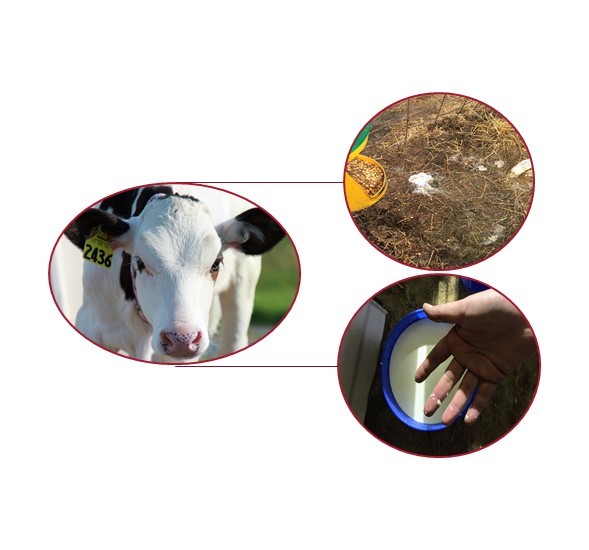
Figure 1. This is normal manure from a calf on a high plane of nutrition. Without knowing further background information about the calf, it could also be a sign of nutritional scours.
Causes of True Nutritional Scours:
- Excessive lactose in the milk replacer (>300 grams/day or >0.75% of body weight)
- Poorer quality milk replacer (those that incorporate primarily alternative proteins from plants vs milk proteins)
- Incorrect mixing of milk replacer or additives (undermixing leaving clumps of powder still intact, overmixing causing particles to crash out of solution, wrong mixing temperature)
- Incorrect dilution or percent total solids (too low or too high)
- Cows' milk: 12.5%
- Acceptable range for milk replacer depending on volume fed: 12%-15%
- Inconsistent dilution (a 1% change in total solids is enough to cause digestive upset; example: 14% solids one meal, 12.8% next meal, 14.2% following meal)
- High bacteria load due to:
- Improper storage of milk or mixed milk replacer
- Dirty pasteurizer or buildup in autofeeder tubes or nipples
- Dirty bottles/buckets or mixing utensils
- Milk from cows with mastitis or high somatic cell count
How to Troubleshoot:
- Calf appearance
- Cleanliness audit
- Work a trusted advisor to get proper tools to identify high risk areas
- Check for quality ingredients on the milk replacer tag
- Follow directions on the bag for mixing (can be specific to the type of milk replacer)
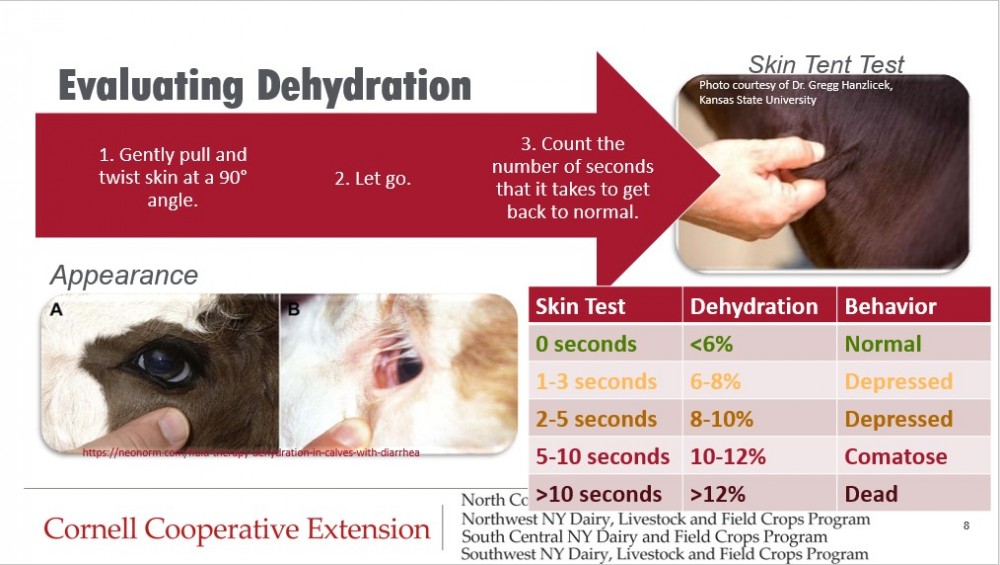
Figure 2. Evaluate dehydration in calves using overall appearance and the "Skin Tent Test"
- Weigh both powder and water, and use a refractometer to check total solids % in milk or milk replacer. Make adjustments accordingly:
- BRIX % +2 = total solids % for whole milk
- Check with nutritionist for the correct adjustment for your specific variety of milk replacer as they can differ
- Place a thermometer in the pipeline or near the sink to check mixing and delivery temperature accuracy
- Keep records during feedings (test and write down % solids, and any health observations)
- Monitor the color of manure (Note: Some pathogenic scours can be whitish in color as well, such as rota- and coronavirus, so color alone is not a diagnosis)
- Perform a fecal culture (work with your veterinarian to determine/rule out possible pathogen presence)
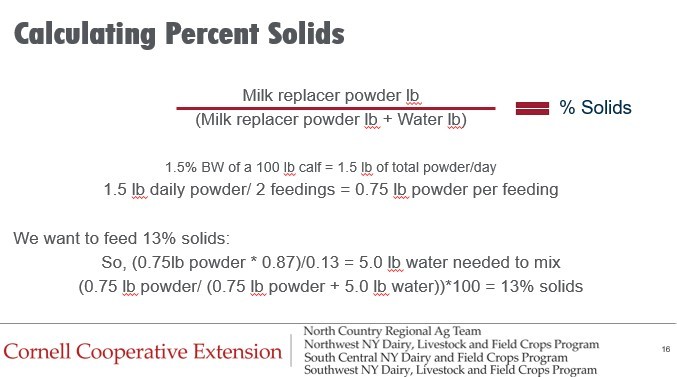
Figure 3. Description of equations used to calculate percent total solids of milk replacer
What Else Helps?
- Continue feeding calves throughout their bout of scours
- Calves' bodies and immune systems need nutrients to fight pathogens and for continued growth
- Direct-fed microbials and prebiotics
- Promotes, supports and strengthens immunity
- Common ingredients include:
- Hydrolyzed yeast cell wall products (intestinal integrity)
- Beta-glucans from live yeast (primes the immune system)
- Beneficial bacteria such as Bacillus subtilis (inhibits bad bugs)
Conclusion:
In summary, in order to meet growth targets and performance goals calves require sufficient nutrients. Calculating these requirements can appear to be overwhelming, but please reach out to one of us, or your trusted advisors for assistance. It is also important to remember that the information provided in the first half of this article is exclusive to nutrients supplied by liquid feeds. Providing solid feed is equally important (and now a requirement for the FARM 4.0 program starting at 3 days of age!) in promoting growth and overall success during the pre-weaned phase of life. Feeding calves high amounts of milk or milk replacer in order to meet elevated growth targets/goals can often result in loose manure. Normal loose manure is often confused with nutritional scours, but it is important to understand that properly feeding more milk to calves shouldn't result in nutritional scours as we've described it here. If you suspect that true nutritional scours is affecting your calves, it's time to find out why.
To watch the webinar recording of this topic and others in the Critical Calf Care series visit: https://www.youtube.com/playli...
Margaret is the regional Dairy Management Specialist for Cornell Cooperative Extension's Northwest New York Dairy, Livestock and Field Crops Team. She provides dairy producers with technical and practical resources in the areas of production and nutrition management, calf care, and precision dairy technologies to improve herd management and cow health. To contact Margaret, email maq27@cornell.edu and refer to the NWNY Team's website and/or blog.
Casey Havekes is a Dairy Management Specialist on Cornell Cooperative Extension's North Country Regional Ag Team. Casey's recent focus has been on calf health, management and nutrition, transition cow management, and lactating cow nutrition. For more information please refer to the Team's webpage and/or blog, or reach out to Casey at cdh238@cornell.edu.

Field Crops
Dairy

Business
Livestock

Grains
Upcoming Events
Livestock Production Field Day
August 29, 2026 : Livestock Production Field Day
Chaffee, NY and East Aurora, NY,
Join us on visits to Horizon Ridge Farm in East Aurora and Troll Bridge Farm in Chaffee for an introduction to small beef and small diversified livestock enterprises. Through walking farm tours, attendees will learn about management, meat processing, setting prices, and finding local markets. Dinner will be provided. Register by contacting Amy Barkley at amb544@cornell.edu or 716-640-0844.
Poultry Processing Workshop, Naples, NY
September 17, 2026 : Poultry Processing Workshop - Naples, NY
Naples, NY
This program is one of four statewide roadshow stops across the state, offering farmers a full poultry processing experience. The class will teach skills that build confidence, reduce costs, and strengthen your farm's independence. This hands-on workshop gives farmers the chance to process a bird from start to finish, learning every step of the workflow used by small farms across the state.
Large Animal Awareness Training For First Responders
September 19, 2026
Dunkirk, NY
Join the Chautauqua County Technical Rescue Services and NYS Veterinarian, Dr. Kate Card-Allen, for a specialized training on how to safely and effectively respond to large animal incidents. Learn techniques for managing large animals during traffic accidents, rollovers, entrapments and other transportation emergencies.
Announcements
No announcements at this time.