
Are Cows Emotionally Intelligent? by Dr. Tripp
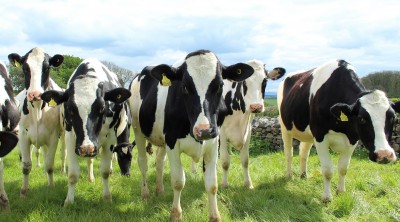
Are Cows Emotionally Intelligent? By Dr. Scott Tripp
Most people who work closely with cows already know that cows are much more than what they can provide for us… which is why in the dairy industry, cow comfort is a big deal. We understand that the physical and mental health of a cow creates a better life for both the herd… and the people that work with them.
A Day in the Life of a Cow
I often see the question, what is a day like in the life of a cow? I believe this is important to understand—especially when you manage a herd.
Typically, life revolves around milking, eating, drinking, socializing, lying down, sleeping and chewing their cud. The physical health of the cow is keyed into eating, cud chewing and drinking. Their mental health is keyed into sleeping and socializing.
Much like us, cows enjoy a routine that is consistent. Like all animals, they have an internal clock that is keyed off of day length and sun angle—it is regulated all the way down to the cellular levels.
The pivot point is lying time. Given a choice they choose to have at least 10 hours of lying time versus eating. There is an order to it… after lying, then comes eating, followed by social contact.
We often look at a 24 hours' time budget… and this is what it looks like for a cow in a three-time-a-day milking herd:
- Time spent milking 3.5 to 4 hours
- Time eating 4 to 5 hours
- Time socializing and drinking 2.5 hours
- Time lying down 12 hours
If you do the math, that's 22 to 23.5 hours a day… so you can see, there is not a lot of time for management activities!
The Importance of Lying Down
It is interesting to note that the lying time is not spent all at once. Depending on the softness of the bed they are lying on, they average 1.2 hours of a lying at a time. In a given day, they do that an average of 12.9 times.
So… about every hour they get up.
The other interesting fact is that they only really sleep in REM slumber for about 45 minutes. The rest of their sleep is much like dozing—occurring while they are standing or lying.
During this time, we need to recognize cud chewing. It can occur while standing or lying and its duration is about 8 hours a day.
The important thing is that we prefer it occurs while lying down. Lying improves milk flow to the udder which increases milk production.
Editor's note: The author is a consultant with Amelicor which distributes his blog posts in series. This piece as posted Mar. 25. More information on this series can be found at www.amelicor.com.

Field Crops
Dairy

Business
Livestock

Grains
Upcoming Events
Dairy Feeder School
October 29, 2026 : Dairy Feeder School
Freedom, NY
- One day on-farm training for dairy farm feeders
- Offered in English and Spanish
- Stations with hands-on activities/demos
Tax 102: Tax planning and strategies for Farmers
November 4, 2026 : Tax 102: Tax planning and strategies for Farmers
This webinar follows the "Introduction to Income Taxes" webinar from September, going more into depth on topics including: understanding common tax concepts, tax strategies, long-term approaches to managing taxes, and more!
Labor Roadshow: Practical Workforce Strategies for Agricultural Professionals Across New York
November 30, 2026
December 21, 2026
The Agricultural Workforce Development Council of New York State (AWDC) will celebrate a decade of connecting and educating agricultural professionals when Labor Roadshow X returns this December with five in-person events and two webinars across New York State.
For nearly ten years, the Labor Roadshow has brought agricultural professionals together to learn, connect, and navigate the evolving challenges of agricultural labor. The 2026 event will continue that tradition with timely, expert-led discussions focused on the issues affecting farms and agricultural employers today—including labor law and compliance, employee engagement, retention, and workplace culture.
Announcements
No announcements at this time.